
The Restless Edge
COASTAL KERALA

Dr. A. Biju Kumar
Vice Chancellor, Kerala University of
Fisheries and Ocean Studies (KUFOS)
The Kerala coast is not a fixed boundary between land and sea; it is a dynamic, ever-changing system shaped by geological forces, monsoon winds, flowing rivers, and human history.
A Coast That Never Stands Still
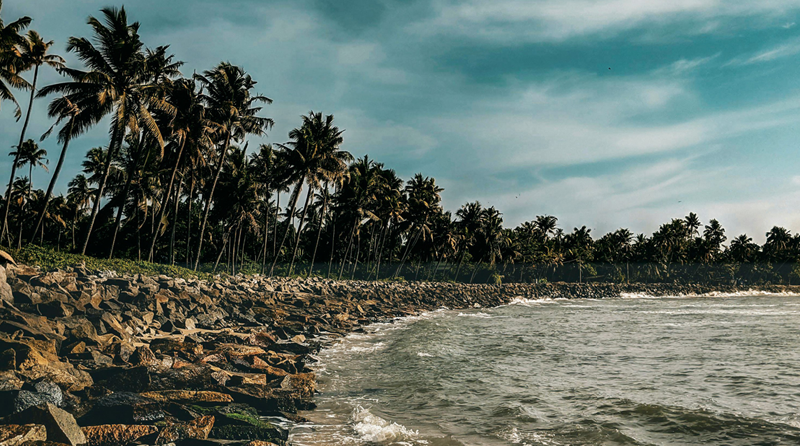
 On a humid evening along the Kerala coast, as waves roll gently onto the shore and fishing boats return against a glowing sunset, it is easy to believe that this landscape has always been the same. The coconut palms, sandy beaches, and quiet backwaters appear timeless. Yet, this apparent stability is an illusion. The Kerala coast is not a fixed boundary between land and sea; it is a dynamic, ever-changing system shaped by geological forces, monsoon winds, flowing rivers, and human history. It is a living, breathing laboratory of coastal geomorphology, a landscape in constant dialogue with the forces of the ocean and the legacy of ancient cataclysms. From the legendary disappearance of ancient ports to the birth of vast below-sea-level wetlands, the story of Kerala’s coast is one of relentless dynamism.
Ancient Foundations and a Faulted Origin
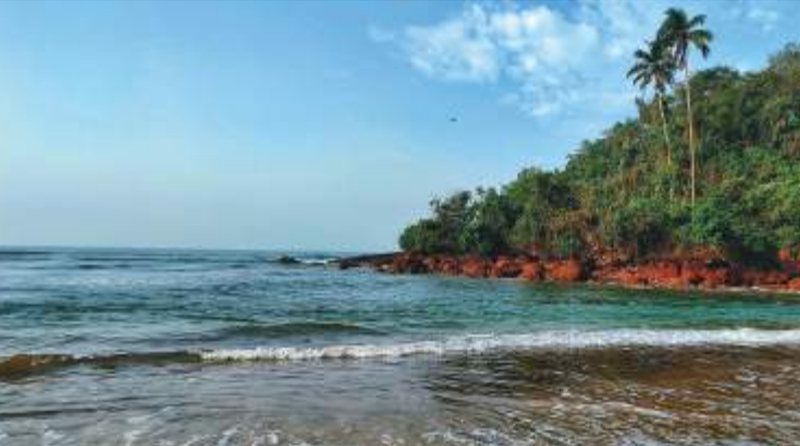
The geological story of Kerala began roughly three million years ago. While most of the state sits on Precambrian crystalline rocks (dating back 0.5 billion years), the specific strip we call the coast was likely forged by faulting during the late Pliocene. This tectonic rift created a unique Western-sloping landscape where 75% of the land has a seaward slope greater than 15%, causing water, sediments, and history to rush toward the Arabian Sea. Throughout the Quaternary period, the shoreline has been a moving target, oscillating with the rise and fall of global sea levels. During the Last Glacial Maximum (~18,000 years ago), the sea was roughly 120 meters lower than it is today. As the ice melted and the sea marched inland, it carved out the bays, lagoons, and sandy barriers that define the modern landscape of Keralam.
A Dynamic Shoreline: Erosion and Creation
Waves, tides, and currents constantly reshape the Kerala coastline. The shoreline shifts over time as sediments are eroded from one place and deposited in another. In some stretches, the sea gradually eats away the land, while in others, new land is formed through deposition. Studies show that the shoreline can move significantly over decades, sometimes by hundreds of metres. Large sections of Kerala’s coast are highly vulnerable to erosion, highlighting the delicate balance between natural forces that shape the coast.
From Mountains to Sea: A Connected Landscape
Kerala’s geography is often described as a sequence of highlands, midlands, and coastal lowlands. However, these are not isolated regions. They are deeply interconnected through rivers and sediment flows. The Western Ghats act as the source of numerous rivers that carry sediments downstream. These sediments are deposited along the coast, helping to build beaches, sustain wetlands, and maintain the coastal balance. Without this continuous supply, the coastline would erode much faster. Thus, the coast is not just shaped by the sea but also by the mountains far inland. The monsoon rains in Kerala are, in essence, a gift from the sea, carried inland as water vapour and returned to the sea through the rivers, completing a continuous cycle. Similarly, the richness and productivity of coastal waters are sustained in part by organic matter transported from forested landscapes to the ocean, linking land and sea in a vital ecological exchange.
The Birth of Backwaters and Vembanad Lake
 One of Kerala’s most distinctive features is its network of backwaters, including the vast Vembanad Lake. These systems are formed through the interaction of marine and riverine processes. Sandbars and barrier spits developed parallel to the coast, trapping water behind them and creating lagoons. Over time, rivers deposited sediments into these lagoons, forming wetlands and deltaic plains. In regions such as Kuttanad, this process, combined with human intervention, has resulted in land lying below sea level. These landscapes are constantly evolving, shaped by both natural forces and human activities.
Monsoon Winds: Nature’s Architect and Navigator
For centuries, the Monsoon was the engine of Kerala’s economy. Driven by ocean-atmosphere interactions, the monsoon influences rainfall, wave patterns, and sediment movement. It is a key factor in coastal erosion and deposition. Sailors from distant lands used these predictable winds to travel to Kerala. The predictable shift in winds allowed Roman, Arab, and Chinese navigators to sail across the ocean to the bustling port of Muziris. Muziris was the “first emporium of India,” a multicultural hub where gold was exchanged for “black gold” (pepper). The coast thus became not only a physical boundary but also a gateway connecting Kerala to the wider world.
As the ice melted and the sea marched inland, it carved out the bays, lagoons, and sandy barriers that define the modern landscape of Keralam.
The Great Flood of 1341: A Turning Point
History records a dramatic example of coastal change: the great flood of 1341 CE. This event is believed to have altered river courses and reshaped the coastline. It played a significant role in the decline of the ancient port of Muziris, once a thriving hub of Indo-Roman trade. Geological Evidence suggests that changes in river channels, combined with sea-level fluctuations and climatic variability, transformed the region. Old waterways were buried, and new ones formed. In the aftermath, ports such as Kochi emerged, demonstrating how natural forces can reshape both landscapes and history.
The Highland -Coast Connection: A Sand River
The health of a beach in Thiruvananthapuram or Alappuzha begins in the Western Ghats. Of Kerala’s 44 rivers, 41 flow westward, acting as conveyor belts for sediments and nutrients. This flow feeds the “longitudinal drift”—essentially a river of sand that flows parallel to the coast. May to September: Monsoon waves cause erosion, moving sand away from the shore. November to March: The reverse flow regains the sand, naturally rebuilding the beaches.
Today’s Coast: Beauty Under Pressure
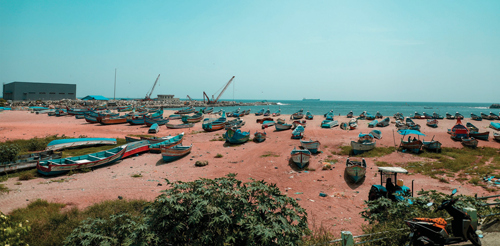
Kerala’s coast today is a landscape of immense beauty, but it is also under increasing stress. Coastal erosion, rising sea levels, and human activities such as harbour construction and seawalls are disrupting natural processes. The balance between sediment supply and wave action is being altered, leading to accelerated erosion in many areas. A significant portion of the coastline is now vulnerable, posing risks to livelihoods, infrastructure, and ecosystems.
The monsoon rains in Kerala are, in essence, a gift from the sea, carried inland as water vapour and returned to the sea through the rivers, completing a continuous cycle.
Oceans, Climate, and the Future
The ocean plays a vital role in regulating climate and sustaining life. It influences monsoon patterns, supports fisheries, and provides numerous ecological services. However, climate change is intensifying storms, warming ocean waters, and causing sea levels to rise. These changes are particularly concerning for low-lying regions like Kerala. Coastal communities face increasing risks from flooding, erosion, and habitat loss. The close relationship between the ocean and human well-being makes it essential to address these challenges urgently. As climate change brings more frequent hurricanes to the Arabian Sea and rising sea levels threaten to submerge Kochi and Kuttanad by the century’s end, the need for healthy ecosystems has never been more urgent.
Modern science is moving away from “hard armouring” (seawalls), which often aggravates erosion in neighbouring areas. Instead, the focus is shifting to nature-based solutions:
Living Shorelines: Restoring mangroves, dunes, and native vegetation to absorb wave energy. For example, 330 feet of mangroves can reduce wave force by 66%.
Room for the Sea: Adopting a “coastal buffer zone” of 50 meters where natural processes can occur without human interference.
Sand Bypassing: Manually moving sand trapped by harbours to the eroded northern sides to mimic natural drift.
A Coast that Teaches Us
The story of Kerala’s coast is a story of constant change and deep connections. It is shaped by the interplay of mountains, rivers, oceans, and winds. It has influenced history, culture, and livelihoods, and continues to do so.
As we stand by the sea, watching the waves reshape the shore, we are reminded that the coast is not a boundary but a living system. “The coast is not where the land ends, but where Earth’s story is continuously rewritten.” To secure our future, we must learn to live with nature’s rhythms, not against them.