
Mighty operation thunder
Operation Thunder represents Kerala’s intelligencedriven and zero-tolerance approach towards narcotics and substance abuse.

Seeram Sambasiva Rao IAS
Excise Commissioner
The menace of narcotic drugs has emerged as one of Kerala’s most serious social and public health challenges, demanding a strong, coordinated, and sustained response. To challenge this, the Government of Kerala launched Operation Thunder, a comprehensive statewide anti-narcotics enforcement initiative implemented by the Kerala Excise Department under the leadership of Chief Minister V.D. Satheeshan and the guidance of Minister for Excise and Cooperation M. Liju. As part of the Mayangilla Keralam campaign, Operation Thunder represents Kerala’s intelligence-driven and zero-tolerance approach towards narcotics and substance abuse.
Excise Department’s Focused Response to the Narcotics Challenge
The mission aims to dismantle drug supply chains, prevent illicit trafficking, and safeguard future generations through scientific enforcement, advanced technology, inter-agency coordination, and public participation. By targeting organised drug networks and ensuring effective legal action, the initiative reinforces the State’s commitment to building a drug-free society.
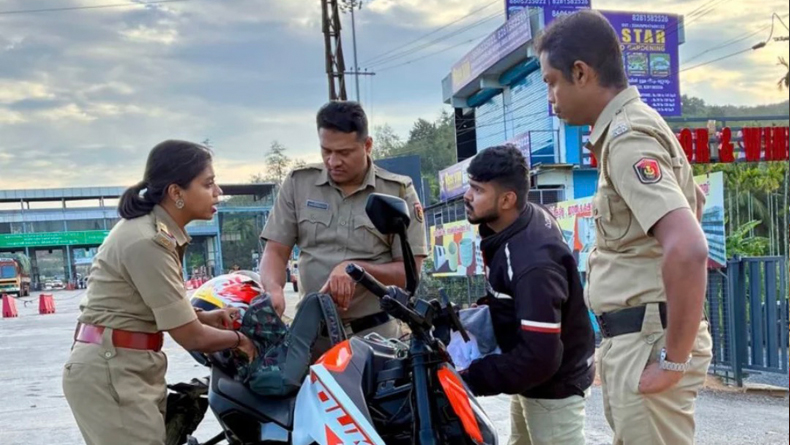
Since its launch on 18 May 2026, Operation Thunder has achieved significant operational success across Kerala. The Kerala Excise Department has conducted more than 24,000 inspections and raids, leading to the detection of over 20,000 cases under the Narcotic Drugs and Psychotropic Substances Act 1985, Abkari Act 1 of 1077, and Cigarettes and Other Tobacco Products Act 2003. Thousands of offenders have been apprehended, while substantial quantities of narcotic substances including ganja, hashish oil, MDMA, methamphetamine, and illicit liquor have been seized. These efforts have strengthened the State’s ability to identify trafficking patterns and disrupt organised criminal networks.
The success of Operation Thunder is built upon the organisational strength of the Kerala Excise Department. Under the Excise Commissionerate, the Department functions through an extensive state wide network comprising enforcement and administrative wings, joint excise commissioners, deputy commissioners, excise divisions, ranges, and circles. The Excise Intelligence Bureau acts as the key intelligence and surveillance wing, while the Excise crime branch handles complex investigations. Supported by thousands of civil excise officers working at the grassroots level, this integrated structure ensures coordinated, intelligence-based enforcement against narcotic offences.
The Kerala Excise Department has conducted more than 24,000 inspections and raids, leading to the detection of over 20,000 cases.
Major Operations
One of the significant achievements of Operation Thunder has been the detection of major interstate drug trafficking networks. A Nigerian national allegedly involved in operating a large-scale drug distribution network spanning Bengaluru and Kerala was arrested by a Special Investigation Team (SIT) led by Wayanad Assistant Excise Commissioner Y. Prasad. In another major operation, the Excise Commissioner’s Squad, Kozhikode Excise Intelligence Bureau, Kozhikode Deputy Excise Commissioner’s Squad, and Kozhikode Anti-Narcotic Special Squad, with technical support from the Excise Cyber Cell, intercepted a vehicle near Pantheerankavu Toll Plaza, Kozhikode, and seized 3.312 kilograms of MDMA trafficked from Rajasthan.
The Angamaly Excise Range achieved one of Kerala’s largest recent ganja seizures by confiscating 110 kilograms of ganja and arresting four individuals involved in an organised interstate syndicate. Similarly, the Palakkad Excise Special Squad seized 538 grams of methamphetamine during an operation at Pambampallam Toll Plaza, Palakkad. These operations demonstrate the Department’s focus on dismantling both street-level distribution channels and larger supply networks.
Operation Thunder has also expanded beyond conventional enforcement through specialised thematic operations. Operation Hideout, spearheaded by the Excise Intelligence Bureau, focused on lodges, hotels, homestays, and other establishments suspected of facilitating narcotics consumption and trafficking. Conducted simultaneously across districts, the operation highlighted the Department’s capability for coordinated intelligence-based interventions and strengthened preventive enforcement mechanisms.
 Calculated Precaution
Going forward, Operation Thunder will evolve into a long-term anti-narcotics mission supported by advanced intelligence systems, stronger interstate coordination, and targeted action against emerging drug threats. The proposed State Narcotics Control Bureau under the Kerala Excise Department aims to create a specialised institutional mechanism to enhance intelligence gathering, coordinated investigations, specialised training, inter-agency cooperation, and focused action against organised drug networks.
The Mayangilla Keralam campaign serves as a comprehensive public platform covering drug prevention, enforcement, de-addiction, rehabilitation, and awareness initiatives. Operation Thunder is therefore more than an enforcement drive; it represents Kerala’s collective commitment to protecting society from the threat of narcotics. Through institutional strength, technological innovation, intelligence-based operations, and public participation, the Kerala Excise Department continues to redefine anti-narcotics enforcement. The message remains clear: Kerala will neither tolerate narcotics nor compromise in its pursuit of a safer and healthier society.