
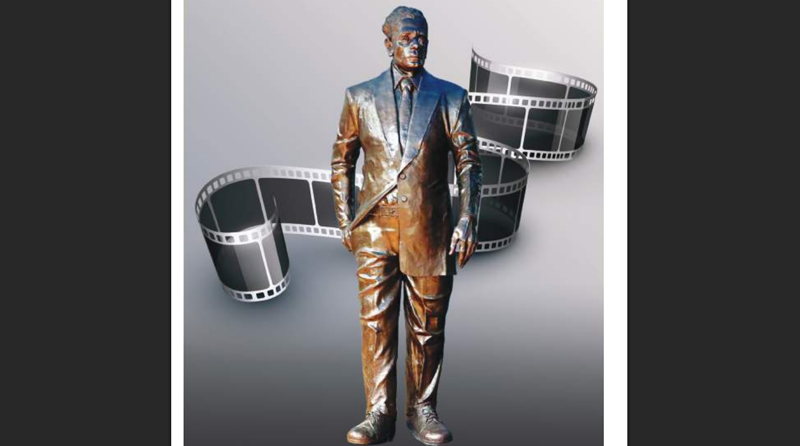
A Bronze Tribute to J.C. Daniel
IN MEMORY
 At the entrance of Chitranjali Studio in Thiruvananthapuram, a majestic figure now stands in silent contemplation. Perched upon a 7.5-foot pedestal of Krishnashila (Black Granite), the 10-foot bronze statue of J.C. Daniel captures the Father of Malayalam Cinema in a poignant, creative pause—brooding over his next shot during an interval. This statue is more than just a monument; it is a long-overdue tribute to a man who sacrificed everything for the love of celluloid.
The Man and His Legacy
Born into a wealthy family of medical professionals in Agastheeswaram, J.C. Daniel was the son of a prominent doctor. However, his heart belonged to the arts. Driven by a vision to bring cinema to Kerala, Daniel sold 108 acres of his ancestral land to establish Travancore National Pictures, a studio modelled after those he had seen in Mumbai. In 1930, he produced and directed the first Malayalam film, Vigathakumaran (The Lost Child). The film’s production was a testament to Daniel’s resilience. After being swindled by a prospective heroine from Mumbai, he cast P.K. Rosi, a Dalit woman, to play the lead role of a Nair woman named Sarojini.
This act of progressive casting met with violent backlash. During the film’s premiere on October 23, 1930, at the Capital Theatre, an angry mob, incensed by Rosi’s presence and her portrayal of an upper-caste character, tore down the screen and attacked the venue. Though the film was screened elsewhere, the financial losses were catastrophic. Daniel was forced to sell his wife’s property and his beloved studio to settle debts. He eventually left for Chennai to practice dental medicine, passing away in 1975, long before his contributions were fully recognised.
 A Befitting Homage
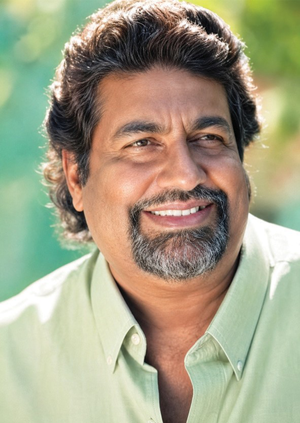
Decades later, at the request of Daniel’s family, measures were taken to commission a monument to rectify history’s silence. The task fell to Kunnuvila Murali, a celebrated sculptor and retired lecturer from the Government College of Fine Arts. A winner of the Kerala State Award for art metal ware, Murali is a seasoned sculptor known for his statues of Mahatma Gandhi, B.R. Ambedkar, and Thakazhi Sivasankara Pillai. The creation of the 1.5-tonne bronze statue was a meticulous eight- month journey:
Research: With no full-length photos available, Murali studied family group photos and childhood pictures from age three to reconstruct Daniel’s likeness.
Design: Six miniature models were submitted, from which the brooding posture‐complete with 1930s-style tailoring and period- accurate shoes—was selected.
Execution: A clay model was first prepared for approval. Upon seeing it, Daniel’s son C J Harris Daniel remarked that it perfectly captured his father’s “majestic posture.” Once approved, the finalbronze casting began.
Immortalising the Legend
The highest award in Malayalam cinema now bears the name of J. C. Daniel—a fitting tribute to the man who once stood alone in the interval between a dream and a revolution. Commissioned by the Department of Culture at the behest of Daniel’s family, the statue stands as a reminder of the courage of the man who gave everything to start an industry that now defines Kerala’s cultural landscape. Today, as filmmakers pass the gates of Chitranjali Studio, they are greeted by the man who started it all, forever poised at the “interval,” dreaming of the next frame in the history of Malayalam cinema.