
“Will harness the potential of Kerala” Chief Minister’s Roadmap for A Future-Ready State
CM TALKS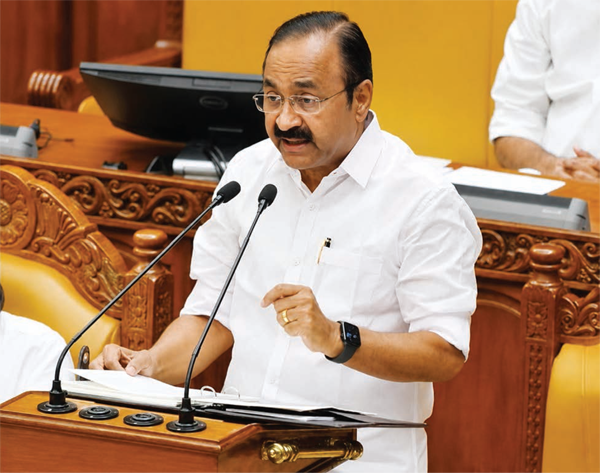
As Kerala stands at a fiscal crossroads, the new government has presented a budget that aims to reconcile an ambitious welfare agenda with the urgent need to reboot the state’s economy. In this interview with Kerala Calling, Chief Minister V. D. Satheesan outlines his five year roadmap designed to attract investment, retain youth and ensure inclusive growth. He explains how the budget balances fiscal discipline with transformative projects that seek to reshape Kerala into a modern, equitable and investment ready state.
Kerala Calling (KC): You have presented your government’s first financial budget, described as capable of ushering in a radical economic transformation. What is your broad vision for the development of the state?
Chief Minister V. D. Satheesan: Our vision is to create a Kerala fit for the demands of the modern era. The budget I presented is intended to be the roadmap for the state’s development over the next five years. Kerala’s social and development indicators have shown worrying trends, and youth unemployment is rising. My government is committed to revitalising the economy, strengthening health and education, expanding job opportunities, improving the state’s finances, and ensuring equitable distribution of wealth that includes the marginalised and poor. Despite a total debt burden of 5.07 Lakh Crore, we are taking up ambitious projects to make Keralam an attractive destination for investment and to usher in a Puthu Yuga Keralam. I am proud to have presented a budget that upholds this vision.
KC: The White Paper prepared before the budget noted that Keralam’s capital expenditure is among the lowest in the country. How do you plan to increase capital investment?
 CM: The White Paper revealed the true state of Keralam’s finances. We face an unprecedented fiscal crisis: for every ₹100 the government earns, ₹77 goes to committed expenses such
as salaries, pensions and interest payments. Only a small remainder is available for welfare and basic infrastructure. Even so, we have not increased a single rupee in tax payment.
We need better financial management to stop leakage from the exchequer. Project delays cause large losses and waste public funds. We will set specific protocols for project implementation and hold officials accountable. The Planning Board will be transformed into a think tank to advise on fiscal management.
At the same time, our policy welcomes private investment. What new project can a government, saddled with immediate liabilities of ₹87,000 crore and a total debt of ₹5.07 lakh crore start in the public sector? Other states are competing among themselves to get investors. But there is resistance when private investors come here. That is not our policy. Private investment will be encouraged. It is the only way to rejuvenate the economy. The government will act as a facilitator for all investment opportunities. It does not mean we will privatise public sector institutions.
KC: Attracting private investment is a central plank of the budget. What specific projects and measures have you proposed?
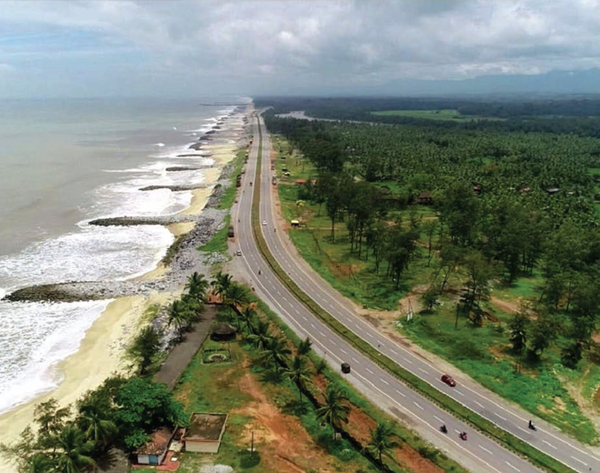
CM: It is imperative to introduce certain structural changes in our system and more importantly a cardinal change in our thinking to woo private investors to the state. We will set up a Single-Window Invest Kerala Cell to expedite industrial development. A Land Management policy will be formulated to use large tracts of unused land for new investments. Special Investment Zones will be established to encourage industrial development. Kerala will be promoted as an Investment Economy rather than a remittance-dependent one. This budget has allocated ₹400 crore to Mission Samudra, a flagship initiative to integrate Kerala’s 600- km coastline into a cohesive Port City. We have also allocated ₹200 crore to leverage the state’s four international airports and position Kerala as South India’s premier logistics hub. This government will tap opportunities in the Space Economy. The Southern Kerala Economic Corridor connecting Thiruvananthapuram, Kollam and Alappuzha will be created for job creation. We will establish Kerala Health and Life Science City integrating multi- specialty hospitals, medical college, research and diagnostic laboratories, rehabilitation centres, and training facilities. Brand Keralam will be promoted and marketing avenues will be expanded for local products. Recognising tourism as an industry will attract investment and formal support.
 KC: Could you elaborate on Mission Samudra and the vision of a Port City?
CM: We will formulate a maritime policy to build Kerala into a port-based economy and maritime hub. The budget outlines an ambitious plan to make Kerala one of India’s leading maritime and logistics centres by leveraging Vizhinjam International Seaport and integrating the State’s 600-km coastline, 17 non-major ports, two major ports, and road, rail, sea and inland-waterway networks. The idea is to transform Kerala’s coastal and transport assets into a single, integrated port-city hub. We are confident in our ability to execute this vision.