
Building a Resilient Kerala
BIODIVERSITY
|
Dr. N. Anil Kumar |
Dr. V. Balakrishnan |
Dr. Akhila S. Nair |


Kerala’s Living Natural Heritage
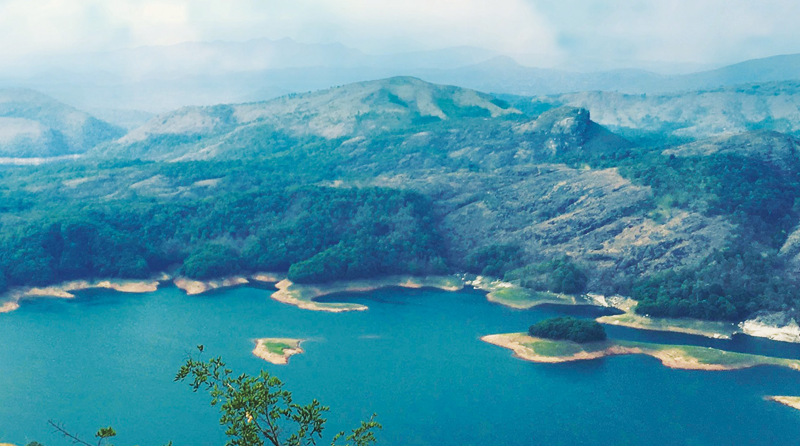
Kerala, spanning 38,863 sq. km and physiographically divided into Highland (48%), Midland (42%), and Coastal Lowland (10%), is an ecological powerhouse with ecosystems ranging from diverse forest types, laterite hills, mangroves, wetlands, grasslands, and Myristica swamps to unique agro-ecological zones (5 zones/23 units). The state’s forests (including green cover), covering nearly 29% of its size, encompass tropical wet evergreen, semi-evergreen, moist and dry deciduous, montane shola- grassland systems, and mangroves, and are home to 16 wildlife sanctuaries and 7 national parks. These forests serve as hydrological lifelines through 44 major rivers. The state’s 590+ km coastline, extensive backwaters, estuaries, and agro ecosystems such as Kuttanad, Kole, Kaippad, and Pokkali fields sustain biodiversity and livelihoods while buffering climate extremes.
The Kerala State Biodiversity Strategy and Action Plan (KSBSAP 2025–2035) sets out a roadmap to make Kerala the most biodiverse- friendly developed state by 2035, aligning with the Kunming–Montreal Global Biodiversity Framework (K-MGBF) and the Sustainable Development Goals.
Kerala, spanning 38,863 sq. km and physiographically divided into Highland (48%), Midland (42%), and Coastal Lowland (10%), is an ecological powerhouse with ecosystems ranging from diverse forest types, laterite hills, mangroves, wetlands, grasslands, and Myristica swamps to unique agro-ecological zones (5 zones/23 units). The state’s forests (including green cover), covering nearly 29% of its size, encompass tropical wet evergreen, semi-evergreen, moist and dry deciduous, montane shola- grassland systems, and mangroves, and are home to 16 wildlife sanctuaries and 7 national parks. These forests serve as hydrological lifelines through 44 major rivers. The state’s 590+ km coastline, extensive backwaters, estuaries, and agro ecosystems such as Kuttanad, Kole, Kaippad, and Pokkali fields sustain biodiversity and livelihoods while buffering climate extremes.
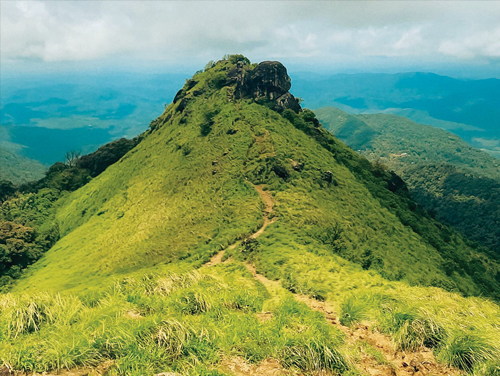 Encompassing 450 km of the Western Ghats—one of the world’s 36 biodiversity hotspots and a UNESCO World Heritage Site—Kerala contributes over 25% of India’s plant diversity within just 1.18% of its land area, with forests safeguarding 1,272 endemic plant species, a rich repository of medicinal plants, and flagship fauna such as the lion-tailed macaque and Nilgiri tahr. Its’freshwater fish and amphibian diversity exceed 60% of endemism, while vertebrate wealth includes 1,847 species (905 fish, 151 amphibians, 173 reptiles, 500 birds, 118 mammals), alongside 598 spider species, 328 butterflies, and 181 odonates, totalling around 12,000 taxa. Coastal and marine ecosystems add 468 marine fish species and diverse crustaceans, molluscs, and mammals, further underscoring Kerala’s extraordinary biodiversity heritage. Indicators for Measuring Biodiverse-Friendliness in a Fast-Urbanising State The Western Ghats, while globally celebrated for their biodiversity and ecosystem services, are also among the most densely human-populated biodiversity hotspots, creating intense pressure on fragile ecosystems. Kerala, with 72% of its geographical area lying within the Ghats, is the most densely populated state in the region, with 860 persons per sq. km and urbanisation projected to reach 96% by 2036. This convergence of exceptional biodiversity richness and high human density makes safeguarding ecological wealth while pursuing developmental outcomes Kerala’s most critical challenge. Achieving a biodiverse- friendly trajectory in Kerala requires a set of measurable indicators that are aligned with the K-MGBF 23 targets.
Kerala’s Contrast in Social Development and Biodiversity Friendliness
Kerala consistently ranks at the top of NITI Aayog’s SDG India Index, excelling in social development indicators such as poverty reduction (SDG 1), health and well-being (SDG 3), quality education (SDG 4), and gender equality (SDG 5). These achievements reflect the state’s strong institutional capacity and inclusive governance, making it one of the most socially advanced states in the country. At the same time, Kerala is endowed with extraordinary biodiversity wealth. Yet, as highlighted in the comparative assessment of SDG performance (see table), Kerala’s environmental SDGs, particularly SDG 2 (agrobiodiversity and zero hunger), SDG 13 (climate action), SDG 14 (life below water), and SDG 15 (life on land), remain constrained by weakened habitat restoration, man-animal conflicts, invasive species control, agrobiodiversity incentives, and ecosystem resilience, leaving biodiversity friendliness lagging Kerala’s social achievements.
Table: Kerala’s SDG Performance: Strengths vs Constraints
|
SDG Goal |
Kerala’s Performance |
Strengths / Achievements |
Biodiversity-friendliness Gaps/Improvement Areas |
|
SDG 1–No |
Top performer |
Lowest poverty incidence; strong social safety nets |
Limited livelihood-linked biodiversity enterprises due to weak financing |
|
SDG 2–Zero Hunger (Agrobiodiversity) |
Strong but improvable |
Custodian farmers, traditional rice systems (Kuttanad, Pokkali, Kole), crop diversity |
Need stronger incentives for agrobiodiversity conservation, underfunded support for genetic diversity programmes |
|
SDG 3–Good Health & Well- being |
Leading |
High life expectancy, strong healthcare system |
Environmental health risks (pollution, biodiversity loss) under-addressed due to fiscal gaps |
|
SDG 4–Quality Education |
Leading |
Highest literacy, strong enrolment, gender parity |
Biodiversity education not mainstreamed into curricula |
|
SDG 5–Gender Equality |
Strong |
High female literacy, strong participation in local governance |
Gender mainstreaming in biodiversity programmes remains weak |
|
SDG 13–Climate Action |
Moderate |
Disaster preparedness and resilience frameworks |
Environmental budget only 0.15–0.20% of State Budget, limiting climate and biodiversity action |
|
SDG 14–Life Below Water |
Moderate |
Rich marine biodiversity, strong fisheries institutions |
Coastal ecosystem restoration and pollution control |
|
SDG 15–Life on Land |
Moderate |
Extraordinary biodiversity wealth, strong institutional architecture (KSBB, BMCs, NGOs) |
Habitat restoration, invasive species control, and biodiversity financing severely underfunded |
2035 Roadmap: Kerala State Biodiversity Strategy and Action Plan (KSBSAP)
 The vision of making Kerala India’s most biodiversity-friendly State by 2035 rests on concrete, measurable actions that are aimed at strengthening Local Institutional Architecture for Implementation of the KSBSAP 2025–2035.The
KSBSAP 2025–2035 provides a comprehensive roadmap for positioning Kerala as India’s most biodiversity-friendly state by 2035. It identifies eight Biodiversity Target Areas (KBTAs) with 80 specific Action Targets (KBATs), aligned to the National Biodiversity Strategy and Action Plan (NBSAP), the Kunming–Montreal Global Biodiversity Framework (KMGBF), and the Sustainable Development Goals (SDGs). The KSBSAP action framework is systematically mapped to the Kunming–Montreal Global Biodiversity Framework (KMGBF) and the Sustainable Development Goals, ensuring Kerala’s biodiversity governance is benchmarked against global standards. By embedding targets such as halting species extinction, restoring 30% of degraded ecosystems, conserving 30% of land and waters, reducing invasive species, and mobilizing substantial financial resources, the plan positions Kerala within international commitments while addressing local priorities. With 80 targets across eight thematic areas to be achieved by 2035, but as noted the progress will remain constrained if the fragmented financing and poor convergence continue.
2035 Roadmap: 30 ‘Model BMCs’ as Strategic Anchors for K-SBSAP
The K-SBSAP 2035 has rationalized its implementation strategy by short listing 30 Biodiversity Management Committees (BMCs) across all fourteen districts of the state to serve as model institutions in its implementation. Their selection is guided by ecological significance, administrative diversity, and conservation history, ensuring representation across Kerala’s three physiographic zones— Highland, Midland, and Coastal Lowland—and across governance levels of Grama Panchayats, Municipalities, and Corporations. Priority has been given to BMCs with strong biodiversity management records, including those that have pioneered People’s Biodiversity Registers (PBRs), Access and Benefit Sharing (ABS) mechanisms, and community-led eco-restoration. This strategic short listing ensures that fragile ecosystems such as shola-grasslands, mangroves, wetlands, river basins, and tribal landscapes are represented, while also embedding livelihood opportunities through biodiversity- based enterprises, nurseries, and seed banks. The rationale for the 2030 timeline of the 30 model BMCs is closely tied to global commitments. The 2030 deadline of the Kunming-Montreal Global Biodiversity Framework (K-MGBF) coincides with the end of the UN Decade on Ecosystem Restoration (2021–2030), the Sustainable Development Goals (SDGs), and the critical 1.5°C climate stabilization target. By aligning with these milestones, Kerala ensures that its biodiversity strategy is globally synchronized. The remaining five years (2030–2035) under K-SBSAP are earmarked for replication and scaling, where the successes of the 30 model BMCs will be extended to the rest of Kerala’s 1,036 BMCs.
Turning Biodiversity Wealth into Sustainable Growth
Kerala, home to nearly a quarter of India’s plant diversity within just 1.18% of its land area, envisions becoming the most biodiverse-friendly developed state by 2035. This mission is anchored in the KSBSAP 2025–2035 and global K-MGBF commitments, supported by strong biodiversity institutions—1,034 Biodiversity Management Committees, district coordinators, and Technical Support Groups—that provide a decentralized framework for conservation and sustainable use. To bridge the adequate financing gap and to achieve balanced SDG outcomes, Kerala must triple or more its environmental funding, ensuring statutory mandates, local biodiversity funds, and private sector contributions converge into a robust, outcome-oriented system. Only then can Kerala match its social development leadership with ecological leadership, transforming biodiversity wealth into resilience, economic opportunity, and global recognition as India’s most biodiverse-friendly developed state by 2035.