
Building Resilient Leaders for Tomorrow
ILDM
Staff Reporter
The 2018 Kerala floods, Wayanad landslides, COVID-19 pandemic, cyclones, coastal erosion, heat waves, and extreme rainfall have shown that disasters are no longer isolated events but a constant reality in our rapidly changing world. Whenever disaster strikes, we witness the extraordinary efforts of rescue teams, healthcare professionals, police personnel, firefighters, volunteers, and local communities. Yet, behind every successful disaster response lies months, often years of meticulous planning, risk assessment, coordination, logistics, communication, and leadership.
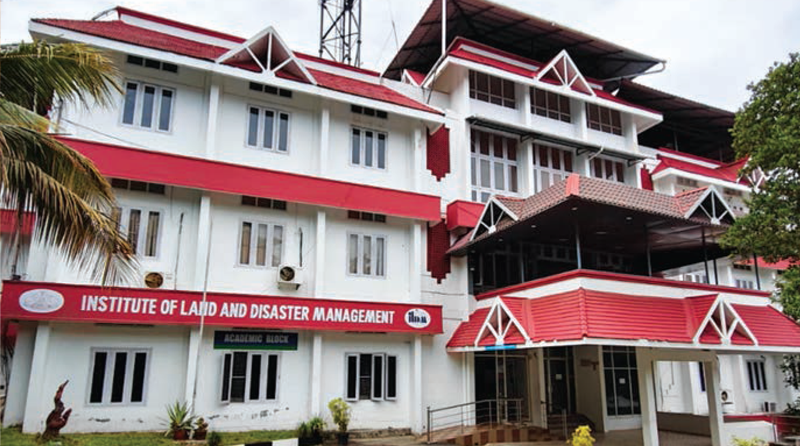
Recognising the growing need for such experts, the Institute of Land and Disaster Management (ILDM), established in 1995, an autonomous institution under the Department of Revenue, Government of Kerala, has emerged as one of the country’s premier centres for disaster management education, research, training, and capacity building. As a key training partner of the National Institute of Disaster Management (NIDM), Government of India, ILDM has significantly contributed to strengthening disaster resilience and institutional capacity across the State and beyond. Understanding that disaster management today demands not only technical expertise but also managerial competence, leadership, and innovation, ILDM introduced the MBA in Disaster Management, affiliated with the University of Kerala and approved by the All India Council for Technical Education (AICTE).
Learning Beyond the Classroom
What truly distinguishes the MBA in Disaster Management at ILDM is its emphasis on experiential learning. The programme firmly believes that disasters cannot be fully understood through textbooks alone, they must be studied in the field, where students witness real-life challenges, interact with communities, and learn directly from practitioners and policymakers. The students have undertaken extensive field studies on the Wayanad landslides, analysing disaster impacts, rehabilitation measures, and long-term mitigation strategies.
In Lakshadweep, students examined island-specific disaster vulnerabilities and reviewed Disaster Management Plans to understand coastal and island resilience. Educational tours across South India enabled students to study diverse disaster preparedness systems, governance models, and best practices adopted by different States.Students have also gained valuable insights into crowd management and emergency planning through field studies conducted during the Maha Kumbh Mela at Prayagraj.
Who plans evacuations, develops early warning systems, coordinates relief operations, and leads rehabilitation and reconstruction after disasters? The answer lies in a new generation of professionally trained disaster management professionals
The International Academic Exposure Programme to Sri Lanka was graciously hosted by the World Health Organisation (WHO) Country Office, Colombo, which facilitated an exceptional platform for academic engagement with leading United Nations agencies and National Disaster Management Institutions. Throughout the programme, students interacted with experts from WHO, FAO, WFP, UNV, IOM, UNFPA, UN-Habitat, and UNICEF, gaining valuable insights into global best practices in disaster risk reduction, emergency preparedness, public health, humanitarian response, and resilience building.
Learning does not end with field visits. Students critically analyse their observations and prepare comprehensive field reports under faculty guidance. These reports have been officially published with ISBN numbers and submitted to government departments, thereby contributing to policy discussions and future planning in disaster management. This unique practice enables students to experience the complete cycle of field research from data collection and analysis to publication and knowledge dissemination.
A Curriculum Designed for the Future
The MBA in Disaster Management integrates management education with disaster science to address emerging global challenges. The curriculum includes disaster risk reduction, climate change and sustainability, humanitarian logistics and supply chain management, GIS and geospatial technologies, public health emergencies, emergency planning, data analytics, disaster policies and governance, business continuity, leadership, and professional communication.
For graduates seeking a meaningful career that combines management, technology, public service, research, sustainability, and social impact, the MBA in Disaster Management at ILDM offers an exceptional opportunity to become part of a profession that truly makes a difference.
An Environment that Inspires Learning
ILDM provides a vibrant academic environment supported by experienced faculty members and distinguished experts from government, academia, research institutions, industry, and international organisations. Students benefit from smart classrooms, advanced GIS and computer laboratories, a well-equipped digital library, high-speed Wi-Fi, hostel facilities, conference halls, wellness and counselling support, meditation and yoga facilities, and multimedia incubation facilities. These resources foster academic excellence while promoting holistic personal and professional development.
Career Opportunities
Graduates of the MBA in Disaster Management are well positioned for careers in disaster management authorities, government departments, national and international organisations, United Nations agencies, NGOs, research institutions, climate and sustainability organisations, infrastructure and urban planning projects, humanitarian organisations, corporate sustainability and ESG divisions, insurance and risk management companies, development consultancies, and academic and research institutions.
Designed for Tomorrow
Disaster management is no longer confined to responding after a crisis. It is about anticipating risks, strengthening preparedness, protecting development gains, and building resilient communities capable of withstanding future challenges. For graduates seeking a meaningful career that combines management, technology, public service, research, sustainability, and social impact, the MBA in Disaster Management at ILDM offers an exceptional opportunity to become part of a profession that truly makes a difference. Because the leaders who save lives during a disaster are often the ones who prepared long before it began.
| Get in Touch
Admissions Office Institute of Land and Disaster Management (ILDM) Email: |