

Decoding Happiness: Lessons from Finland
HAPPIER LIFE

L.R. Madhujan
The core secret behind the happiness of the Finnish people lies in their unique life philosophy known as Sisu.
As the World Happiness Report continues to gauge the well- being of nations across the globe, Finland once again emerges at the pinnacle, maintaining its consistent first-place ranking.
This nation stands as a profound testament to how a governance model that prioritises the human psyche and social security over mere economic growth can cultivate a truly joyful populace. Finland effectively demonstrates that happiness is not a commodity to be bought with wealth alone.
Researchers primarily consider six key variables when measuring this state of being:
- The certainty that there will be someone to lean on during difficult times
- Access to superior healthcare and a pristine living environment
- The fundamental right to make personal life choices
- A pervasive spirit of generosity toward others
- A deep-seated trust in the government and public institutions, characterised by near-zero levels of corruption
- A baseline of financial security
 Where Happiness is Inner Strength
The core secret behind the happiness of the Finnish people lies in their unique life philosophy known as ‘Sisu’. This represents an extraordinary mental resilience and the innate ability to face adversities without fear. Whether enduring the harsh, dark winters or confronting personal setbacks, they meet challenges with an indomitable fighting spirit, which in turn fosters a sense of profound self-confidence and contentment. Furthermore, Finland boasts one of the world’s finest education systems, where children are nurtured without the pressure of heavy homework or frequent examinations. By emphasising learning through play and direct experience, the system builds immense mental strength in the younger generation.
In Perfect Harmony
The social fabric is further strengthened by a culture that values family bonds; it is common for mothers to return to their careers after maternity leave while fathers take the lead in childcare at home. This deep connection extendsto the environment aswell. Underthe legal principle of ‘Everyman’s Right,’ citizens enjoy the freedom to wander through forests and along lake shores at will. Ranking among the world’s best for air and water quality, Finland’s intimate relationship with nature serves as a natural catalyst for reducing mental stress. Safety also plays a critical role, as Finland remains one of the world’s safest nations. Their justice system prioritises the rehabilitation and dignified reintegration of offenders over mere punishment, a strategy so successful that many prisons in the country are now being phased out.
In stark contrast, the 2024 report ranks India 126th out of 143 countries, placing it behind even its neighbours like Pakistan and Libya. This lower standing points toward a significant lack of social support and growing challenges within the mental health sector.
| Finland teaches us that happiness is not a final destination but a continuous journey. |
 The Science behind Happiness
From a neurological perspective, happiness is an intricate coordination of complex chemical reactions and neural networks within the human brain. Neuroscience identifies the primary ‘seat’ of happiness within the limbic system and its associated reward pathways. When we achieve a goal or spend time with loved ones, the Ventral Tegmental Area (VTA) and the Nucleus Accumbens release dopamine, triggering instant satisfaction and excitement. Additionally, the prefrontal cortex at the front of the brain helps us analyse these emotions and plan for long-term fulfilment.
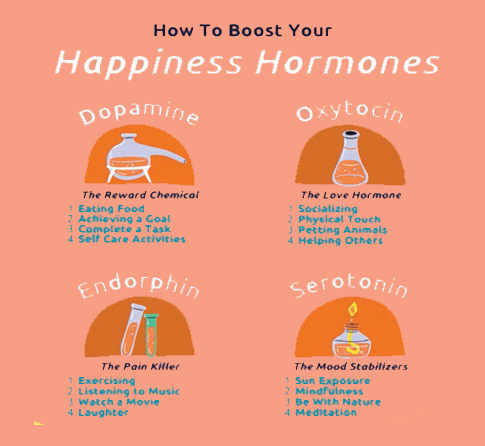
Happiness, however, is not merely a fleeting sensation but a precise equilibrium of ‘happy hormones’ including serotonin, oxytocin and endorphins. While serotonin stabilises our overall mood, oxytocin strengthens our bonds of love and trust with others. Endorphins work to alleviate pain and provide a sense of vigour following physical exertion. While the amygdala manages fear and
anxiety, the scientific essence of happiness lies in the brain’s ability to override these with positive thoughts. By maintaining a healthy work-life balance, the Finnish people effectively lower levels of the stress hormone cortisol, allowing positive neurons to thrive. Ultimately, Finland teaches usthat happiness is not a final destination but a continuous journey-one that can only be realised when
economic progress is harmonised with social justice and individual freedom
The author is the Director of Psychopark,
Thiruvananthapuram