

A Decade of Redefining Grassroots Kerala
“The changes brought about by the local self-government institutions in the lives of the people are amazing. In the past decade people witnessed how projects like extreme poverty eradication, waste-free Kerala, K-Smart, Digi Keralam, Life Mission and knowledge economy have transformed Kerala.”
-M.B. Rajesh
Minister for Local Self Governments, Rural Development,Town Planning, Regional Development Authorities, Excise, KILA and Parliamentary Affairs
 In the last decade, Kerala achieved a landmark milestone by eradicating extreme poverty on November 1, 2025—a feat celebrated worldwide. The state is swiftly advancing toward zero homelessness, on track to deliver five lakh houses through the Life Housing Scheme by February 2026. Revolutionary digital reforms have transformed local self-government: ILGMS since 2016 and K-Smart from 2024 now deliver services swiftly, boost transparency, and curb corruption. The Digi Keralam project has achieved universal digital literacy, empowering all citizens for seamless digital transactions, including via K-Smart. A dedicated commission has submitted its final report on India’s first forwardlooking urban policy, tailored to Kerala’s rapid urbanisation. New Kudumbashree initiatives are driving women’s economic empowerment, while the Vijnanakairali scheme equips youth with skills and jobs. The state government has taken many steps to financially empower the local self-government bodies.
Amount given by the government to the local self-government bodies
• 2011-16 – Rs. 29,500-crore
• 2016-21 Rs. 52,648.39-crore
• 2021-26 – Rs. 70,526.77-crore
• Total Rs. 1,23,175.16 crore in 10 years Share given to the local self-government bodies in the state scheme funds
• 2011-16 – 24.11% • 2021-26 – 27.26%
New LIFE
Kerala takes pride in the fact that NITI Aayog recognised the LIFE Mission as the nation’s top model for housing best practices. The government has built and handed over four housing complexes, purchased one for beneficiaries, and enabled local bodies to construct and distribute five more via partnerships and sponsorships. A memorandum with the Chittilappilly Foundation facilitated ₹50 crore aid to 2,000 landless homeless families for land purchase (up to ₹2.5 lakh each). Registration has been completed for 1,466 families. Kerala leads the nation in housing subsidies. Through the Manassodithiri Mannu campaign, 26.14 acres of land registered by Oct 16, 2025.
Key Milestones:
• 6,00,547 contracts signed for house construction.
• 4,71,6076 houses completed.
• 1,24,471 houses under construction.
• ₹19,127.47 crore spent on LIFE (2017–18 to Dec 31, 2025)
• ₹2,301.05 crore Central share.
No More Long Queues
ILGMS launched across all gram panchayats in April 2022 enables swift online services. Building on this, K-Smart—a cutting-edge unified platform—rolled out in urban local bodies from Jan 1, 2024, and all panchayats from Apr 1, 2025. It has processed over 1 crore files,including 9-lakh in under an hour and 21.5 lakh in a day. Streamlined birth, death, and marriage registrations now happen at unprecedented speed.
Urban Development
Urban Development As per the recommendations of the Urban Policy Commission, an announcement was made in the state budget for 2025 to form Thiruvananthapuram, Kochi and Kozhikode Metropolitan Committees and issue municipal bonds. The Kochi Metropolitan Committee for Kochi city has already been formed. The work of formulating master plans has started in all 93 urban administrative areas. Final approval has been given to 48. Drafts are ready for the remaining projects. The AMRUT project has achieved great results in six corporations and three municipalities to develop infrastructure in cities.
AMRUT Phase-I
Approved – 1111 projects worth Rs. 2358-crore Completed – 1004 projects worth Rs. 1658-crore Nearing completion -107 projects worth Rs. 880-crore In the second phase of the project, administrative approval was given to 740 projects worth Rs. 3514-crore. 63 projects worth Rs. 606.63-crore were completed under the Kochi Smart City project worth Rs. 1070-crore. Out of 72 projects worth Rs. 1135.70-crore, 60 projects worth Rs. 930.49-crore were completed under the Thiruvananthapuram Smart City project.
Employment and Welfare
Kerala is the state that implements the Employment Guarantee Scheme in the best way in the country. Kerala continues to be in the first and second positions in the main criteria for evaluating the implementation of the Employment Guarantee Scheme. Even though the Central Government has been cutting the allocation for Kerala every year, 3411.61 km of roads and 37 village markets have been made possible through this project through effective utilisation. 4100 hectares of fallow land has been made suitable for cultivation. Kerala is the only state that has introduced a welfare fund for employment guarantee workers. Kerala is also the state that has completed 100 percent audit of the scheme. On the model of the Rural Employment Guarantee Scheme, Kerala has also implemented the Ayyankali Urban Employment Guarantee Scheme at the entire cost of the state government. In 2024-25, 30.58 lakh work days were provided under the Ayyankali Urban Employment Guarantee Scheme, at an expenditure of Rs. 165-crore, and in 2025-26, Rs. 33.57-crore have been spent till date. The amount required to provide 200 days of work days to all Scheduled Caste families in the state has been allocated in the state budget and the Kerala Tribal Plus Scheme has been implemented to provide 100 more work days in addition to the 100 days received from the central government.
New Awareness
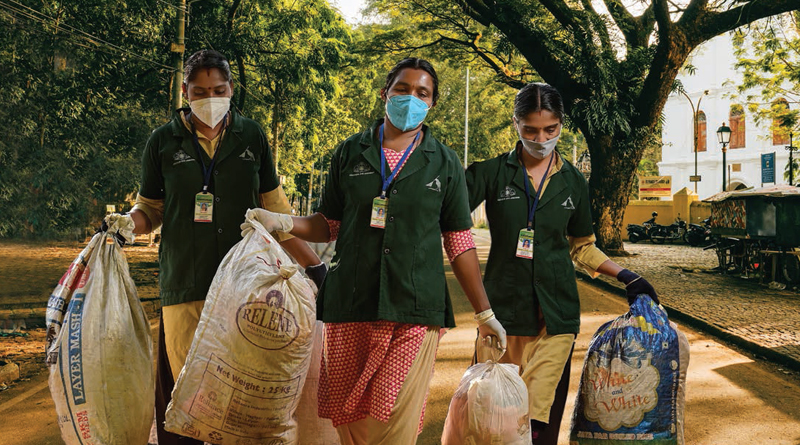
The most noticeable change in Kerala in the last 10 years has been in the field of waste management. Although not complete, it is a great achievement that awareness has been created among the people about waste management. Through the initiatives of local bodies and the activities led by the state government, we have been able to get rid of the bad habit of throwing away to some extent. Many of the mountains of waste that had accumulated over the years have been removed. Along with solid waste management, a good start has been made in the field of liquid waste management. As part of the Waste-Free Nava Keralam campaign, 1027 local self-government bodies in the state have been declared completely solid waste-free on March 30, 2025, the International Zero Waste Day. As part of this, 3060 towns, 3087 market public places, 2,87409 neighbourhood groups, 14321 schools, 1370 colleges, 57201 institutions and 317 tourist centres have achieved green status.
Care for all Sections Kerala is the first state to announce a palliative care policy. Currently, 1142 palliative home care units are functioning across the state under the leadership of local self-government bodies.105504 enterprise units have been started across the state under the leadership of Kudumbashree. Through this, 1.9 lakh households/family members of households have been provided with livelihood. As part of the K-Lift livelihood campaign, livelihood opportunities have been created for 360862 people. In the agricultural sector, 108195 women have started farming on 21457.13 hectares of land. As part of the Kerala Chicken project, 482 broiler farms and 142 outlets are functioning in the state. Kerala Chicken has achieved a turnover of more than Rs. 400-crore till date. The ‘K for Care’ scheme, which provides various home care services under one roof, is being implemented.
Pocket Mart application has been launched to make Kudumbashree’s products available online. A total of Rs. 95-crore has been allocated as a special revolving fund of Rs. 1 lakh to ADSs for internal loan activities. The honorarium of CDS chairpersons has been increased from Rs. 7000 to Rs. 8000. A special roadmap has been issued to local selfgovernment institutions for local economic development, giving clarity on their work. Under the leadership of local self-government institutions, 1,67,284 jobs have already been identified in collaboration with K-DISC. Of these, 75,548 people were employed. In addition to the development, welfare and service sectors, local self-government institutions have also grown to provide employment and income to the people by expanding and activating the local economy.
Excise Department
• Excise officials have been given 83 9 mm Auto pistols and 5400 rounds of ammunition for self-protection.
• Three modern interrogation rooms have been constructed to scientifically interrogate the accused.
• To make inspections at checkpoints transparent, CCTV systems have been installed at 8 important excise checkpoints and a centralised monitoring system has been implemented.
• 2200 drug detection kits to detect drug use and 126 kits to detect the type of drug were purchased.
• To prevent other state vehicles from bypassing checkpoints, four mobile patrol units have been set up in the districts of Thiruvananthapuram, Palakkad, Wayanad and Kasaragod, operating 24 hours a day.
Vimukthi Mission
• Anti-Narcotic Clubs in all categories of schools including public schools, CBSE and Kendriya Vidyalayas in the state at the high school and higher secondary levels. 5862 antinarcotic clubs have been formed this year.
• Nerkkoottam committees formed in college campuses under the leadership of the Principal/Vice Principal and Shraddha Committees formed in college hostels. Currently, 1020 direct committees and 512 focus committees organised.
• Unarv scheme, implemented in 29 schools, provides playgrounds for sports training and provides necessary sports equipment to the school.
• Team Vimukthi sports team project implemented in 1000 schools.
• The Challenge Accepted sports meet conducted at Excise Circle and District levels including Team Vimukthi sports teams.
• Balyam Amulyam project for primary level children, implemented in 140 schools in the first phase.
• The Nervazhi Project identifies the changes in the behavior and behavioral disorders of students due to the use of drugs with the help of teachers and resolves them and brings children into the mainstream of life. (Nervazhi Mobile Number 9656178000).