


Unplug to Reclaim Life
- STAFF REPORTER
One evening after school, Jacob, a 17-year-old boy (name changed for anonymity), came across a digital de-addiction pamphlet in his mother’s handbag. He was subsequently informed that she received it as part of a digital addiction awareness campaign organised by the D-DAD centre. The pamphlet was about healthy smart phone habits and the social, psychological and physical consequences brought on by digital addiction. What struck Jacob’s attention was the questionnaire to check one’s dependency on digital gadgets that was attached to it. The questions asked included: “Do you always feel an urge to message or call someone?”, “Do you experience discomfort or anxiety when you don’t have your smart phone with you or when the phone’s battery is below 50%?” etc. When he checked, Jacob found that his answers indicated a high level of digital dependency.
 He was hooked on his device 24/7, mentally drained and physically weakened. His uncontrollable mobile usage was isolating him socially. Realising the dangerous extent of his smart phone addiction, he wasted no time. Jacob contacted the Chiri Helpline at 9497900200, and his call was forwarded to the regional D-DAD Centre. It is rare for children to take the initiative to seek help voluntarily, but Jacob had recognised that his lack of control over his mobile usage was serious. At the de-addiction centre, he was consistent and attended all his therapy sessions with his family’s support. The staff was amazed at his punctuality and his commitment to free himself from the addiction. His journey inspired others who witnessed this transformation. By the end of the programme, Jacob discovered that he had regained his old self back and reconnected with his life beyond the screen.
The World Health Organisation (WHO) recently included Gaming Disorder in its 11th International Classification of Diseases (ICD-11). This move acknowledges that gaming addiction is now recognised as a diagnosable health condition. In today’s digital age, where internet and online consumption are widespread—the boundary between the real and virtual world is becoming increasingly blurred. As internet usage surged, many individuals, particularly children and teenagers, are engaging with it excessively, often to the point of compulsion. Such digital overuse can negatively impact brain function, emotional wellbeing and social relationships.
 Digital addiction
Digital addiction is a complex multilayered issue. While technology is essential to modern life, with services like banking and shopping to education and entertainment now all digital, this constant availability makes it difficult to disconnect. The allure of the digital world can often overweigh real-life interactions. This issue intensified during the COVID-19 pandemic, as people became more reliant on digital platforms. During that stressful period, addiction appeared in various forms—such as social media, video games, online gambling and auction sites. Like other behavioural addictions, digital dependency can lead to obsession and compulsive behaviour. It often disrupts daily routines, personal responsibilities, relationships and overall wellbeing. Individuals suffering digital addiction tend to act impulsively, ignoring social bonds and personal health. Children are particularly vulnerable—they’re more trusting and easily influenced. During the pandemic, kids turned to digital screens for education and entertainment, leading to significant hours being spent online. As online threats grow, children’s presence in the digital space has become a concern.
Operation D-DAD Kerala’s Unique Response
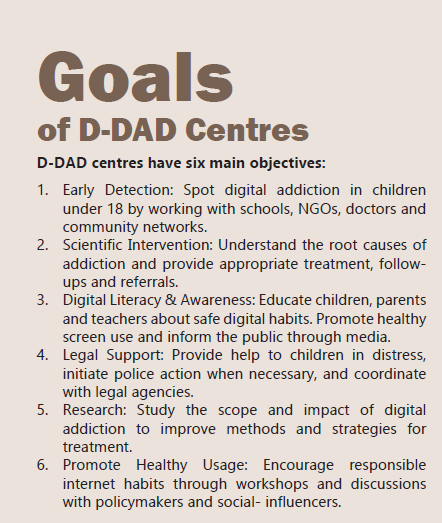
To address this growing concern, the Social Policing Division of the Kerala Police launched Operation D-DAD (Digital De-addiction). This initiative builds on the success of an earlier project CHIRI, a telephone counselling service that can be reached at 9497900200. It was established during the pandemic to help children manage mental stress. While CHIRI remains active, D-DAD is more advanced and focused. It offers targeted counselling and therapy sessions for children struggling with digital addiction, involving both the affected individuals and their families. D-DAD serves as a central point of contact for those seeking information, guidance and support related to digital dependency. Currently, D-DAD operates through six centres located in Thiruvananthapuram, Kollam, Ernakulam, Thrissur, Kozhikode and Kannur. As of March 21, 2025, these centres had handled 1,709 cases: 770 still in treatment, 175 referred to other specialists, 735 successfully resolved and 29 where clients dropped out. The project is set to expand across all districts in Kerala, with eight additional centres proposed in Pathanamthitta, Alappuzha, Kottayam, Idukki, Wayanad, Malappuram, Palakkad and Kasaragod. D-DAD brings together trained experts who have created advanced therapy methods, educational programmes, screen-free retreats and scientifically designed tools to help children manage their behaviour and emotions.
How D-DAD Works
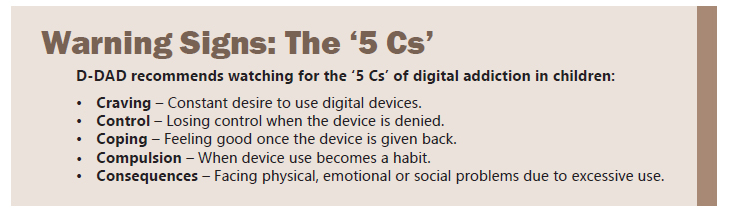
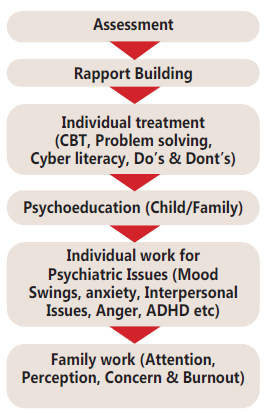 D-DAD addresses not only the child but also their surrounding environment—including families and teachers. Each centre has a psychologist and a project coordinator. Departments of Health and Education actively assist in conducting D-DAD operations and in organising awareness programmes. A designated police officer from the local station also serves as a Police Coordinator for each centre. The psychologist leads the clinical work by evaluating the child, diagnosing behavioural or emotional issues, and developing a custom treatment plan. Once therapy starts, monthly sessions are conducted with children and parents, with ongoing communication in between. If the addiction is linked to deeper mental health conditions like ADHD, the child is referred to medical experts for further help. The Project Coordinator is responsible for managing day to day operations and supporting the psychologist in the implementation of the treatment plan. Meanwhile, the Police Coordinator addresses legal requirements, facilitates school visits and takes part in digital safety awareness campaigns. Oversight for the project comes from the Social Policing Directorate. Principal, Police Training College is the Additional Director for this programme while DySP, Cyber Operations is the Officer-in- Charge. Children may become irritable when denied access, feel instantly better once they get their devices and increasingly depend on digital platforms for happiness. This often leads to fatigue, back pain, vision issues, mood swings, isolation and declining academic performance.D-DAD is a compassionate and proactive solution by the Kerala Police to address the growing concerns of digital addiction among children and to promote safe internet practices. By combining professional counselling and widespread awareness initiatives the programme not only supports healthier digital habits but also ensures emotional and psychological well-being of young users.