

The Land Where Culture Never Sleeps

M.A. Baby
Former Minister
When discussing the cultural heritage of Kollam, the words of the renowned poet Vyloppilli Sreedhara Menon come to mind: “Kollam is the place where the brilliant plumes of the peacock, of Kerala Varma Valiyakoyi Thampuran, fell. Therefore, this land shines with art, literature, and diverse forms of cultural expression.” Azhakath Padmanabha Kurup, who authored Ramachandra Vilasam, the first Mahakavyam in Malayalam, was from Kollam. K. C. Keshava Pillai, the author of another Mahakavyam, Keshaveeyam, also hailed from this region. The prestigious Ezhuthachan Puraskaram, the highest literary award presented by the Government of Kerala, was first conferred upon the renowned scholar Shuranad Kunjan Pillai. Veena Poovu (The Fallen Flower), a groundbreaking poem by Kumaran Asan, stands out in the literary landscape for many significant reasons. This remarkable work was introduced and interpreted by C. S. Subrahmaniam Potti, a distinguished scholar from Kollam. In modern Malayalam poetry, Professor O. N. V. Kurup, Kadammanitta Ramakrishnan, Sugathakumari, D. Vinayachandran, Thirunellur Karunakaran, and Punalur Balan have each carved a unique niche with their distinctive poetic styles.
Among the contemporary poets who remain active today are K. G. Shankara Pillai, N. Prabha Varma, Kureepuzha Sreekumar, Injakkad Balachandran, Chavara K. S. Pillai, and Brinda. When considering this district of Kerala in its earlier extended form—before carving out new districts such as Alappuzha and Pathanamthitta from Kollam—the list of eminent cultural figures grows even longer. Notable personalities include Thakazhi Sivasankara Pillai, Dr. Ayyappa Panicker, Ulloor S. Parameswara Iyer, Professor S. Gupthan Nair, A. R. Raja Raja Varma, Ponkunnam Varkey, Thoppil Bhasi, Parappurathu, Abu Abraham, and renowned cartoonist Shankar, among many others. Notable figures across various fields include historian Elamkulam Kunjan Pillai, Professor N. Gopala Pillai and Professor G. Shankara Pillai, along with renowned writer and critic Professor K. P. Appan. Playwright and satirist E. V. Krishna Pillai, along with writers such as Lalithambika Antharjanam, Pulimana Parameswaran Pillai, Pattathuvila Karunakaran, Vaikom Chandrasekharan Nair, Kakkanadan, K. R. Meera and Benyamin among others, have made significant contributions. The legacy of poetry and music is enriched by the Niranam Poets, Oyur Kochugovinda Pillai, Changanassery Raman Pillai and P. K. Medhini. Translator par excellence V. Ravikumar from Chavara has also made noteworthy his literary contributions.
 In the realm of arts, distinguished personalities include filmmakers Adoor Gopalakrishnan, Paris Viswana than & Jayapala Panicker. The acting fraternity is graced by stalwarts such as Adoor Bhasi, Adoor Pank ajam, Adoor Bhavani, Aranmula Ponnamma, Kottarakara Sreedharan Nair, Murali, and KPAC Lalitha. The world of music is enriched by composers Raveendran and Sharath, and singers Lathika, K. G. Markose, Mughathala Shivaji, Vettikkavala Shashikumar, Mangad Ratnakaran, and Adoor Sudharshanan. Adding to this legacy is Oscarwinning sound designer ResoolPookutty. In performing arts, particularly in Kathakali and classical dance, luminaries such as Oyoor Kochugovinda Pilla, Madavoor Vasudevan Nair, Thonnakkal Peethambaran, Poruvazhi Govinda Kurup, Thurayil Pappu Panicker, Thekkayath Rama Panicker, Chathannur Kochunarayana Pillai, Oachira Shankarankutty, Mayyanad Keshavan Namboothiri, Chirakkara Madhavankutty, Kalamandalam Rajashekharan, Inchakkad Ramachandran, and Kalamandalam Ramachandran have left an indelible mark. Other eminent figures include Kottarakkara Thampuran, (exponent of Ramanattam), FACT Chandrasekharan Nair, Chavara Parukkutty, Kaviyoor Revamma, Kaviyoor Ponnamma, Punalur Rajan, and legendary filmmaker Padmarajan. Their collective contributions have shaped the cultural, literary, and artistic heritage of Kerala.
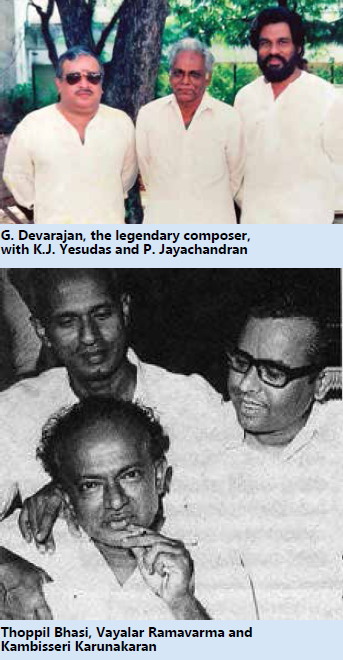
The contribution of Kollam to the field of cinema is truly commendable. Adoor Gopalakrishnan is regarded as one of India’s finest filmmakers, standing alongside legends such as Satyajit Ray, Ritwik Ghatak, Mrinal Sen, and Shyam Benegal. Shaji N. Karun, apart from being an exceptional cinematographer, has directed several critically acclaimed and impactful films. The support extended by film producer and industrialist General Pictures Raveendran Nair in promoting aesthetically distinctive films is also noteworthy. In the realm of film and theatre music, the contribution of Paravur G. Devarajan Master is truly remarkable. His compositions, set to the evocative lyrics of poets and lyricists such as Professor O. N. V. Kurup, Vayalar Ramavarma, P. Bhaskaran, and Sreekumaran Thampi, remain unparalleled in their artistic depth and musical excellence. Kollam is widely recognized as the defacto capital of Kadhaprasangham (the art of storytelling with musical interludes), as well as a thriving hub for both professional and amateur theatre. At one point, the number of artists engaged in Kadhaprasangham and the drama troupes based in Kollam surpassed those from other districts. Some of the most renowned artists in the field include K. K. Vadhyar, V. Sambasivan, N. P. Manmadhan, Joseph Kaimaparamban, Kedamangalam Sadanandan, Kadavur Balan, Kollam Babu, Eravipuram Bhasi, Thevarthottam Sukumaran, Kadakod Viswam bharan, V. Harshakumar, Vasanthakumar Samba sivan, Velinellur Vasanthakumari, Chirakkara Salim kumar, Alleppy Remanan, and Mullakkara Ratnakaran. Through this unique art form, compelling stories of socio-economic and cultural significance were brought to life using action songs, theatrical facial expressions, and dramatic narration.
Thousands of people would sit spellbound for hours, captivated by these performances at both urban and rural cultural festivals. It is interesting to recall that the present writer had the opportunity to listen to countless Kadhaprasangham performances during temple and church festivals, cherishing the profound impact of this storytelling tradition. Apart from Kadhaprasangham performances based on works by renowned Malayalam writers, artists like V. Sambasivan also introduced world classics into the art form, broadening its reach and impact. His adaptations brought global literary masterpieces to local audiences, making them accessible through the unique blend of narration, music, and theatrical expression. It is an indisputable fact that 99 percent of Kadhaprasangham artists, whether from Kollam or elsewhere, were either Communist sympathizers or left-leaning activists. Through their performances, they played a crucial role in promoting progressive, democratic, and secular ideals among the masses who gathered in large numbers to enjoy this art form.
This tradition also served as an educational and cultural bridge, allowing Kerala’s neo-literate population to engage with the great classical works of writers such as Shakespeare, Tolstoy, Victor Hugo, Maxim Gorky, Mikhail Sholokhov, Pearl S. Buck, Ernest Hemingway, Kalidasa, Kumaran Asan, Rabindranath Tagore, Changampuzha Krishna Pillai, S. K. Pottekkatt, and Vayalar Rama Varma, among many others. Theatre groups played a significant role in shaping the progressive mindset of Kerala. Among them, the impact of the play Ningal Enne Communist Aakki, written by Thoppil Bhasi, is particularly well known. First staged in 1952, in a theatre in Chavara, a town in this district it became an instant success. The immense popular interest and enthusiasm generated by the play were unparalleled. Its powerful political message unsettled the ruling classes, leading them to attempt a ban on its performance. In one instance, when the government prohibited the play from being staged in a particular theatre, the artists boldly decided to perform it in an open space. In response, the authorities arrested the performers.
Thousands of spectators who had gathered to watch the play were agitated. In an extraordinary show of solidarity, they picketed the police van and demanded to be arrested alongside the artists. Members of the Kerala People’s Arts Club (KPAC) and nearly two thousand supporters marched almost ten kilometers to the police station, turning their protest into a huge demonstration of mass resistance. Realizing the impracticality of arresting and detaining such a large crowd, the authorities eventually backed down. This incident remains a landmark moment in Kerala’s cultural and political history, as it demonstrated the power of theatre to inspire revolutionary struggles and social change. Another theatre group, Kalidasa Kalakendram, led by O. Madhavan and Vijayakumari, also made a historic contribution to Kerala’s cultural advancement, further strengthening the progressive movement through theatre.
In the field of printing, Kollam holds a significant record. The first book printed in any Indian language was in Kollam on October 20, 1578. It was a Tamil book titled Thampuran Vanakkam. To print this 16 page book, paper was imported from China. Thennatt Reddiyar, commonly known as S.T. Reddiyar, established the Vidhyabhi Vardhini Press in Kollam on August 16, 1886. This press published and sold works by literary luminaries such as Ezhuthachan, Kunchan Nambiar, and Poonthanam, along with Attakadhakal (Kathakali play scripts). In 1892, Paravur Keshavan Ashan launched Sujana Nandini, a publication that actively opposed caste-based discrimination. Due to this, when caste-related clashes erupted between the Nair and Ezhava communities, the Sujana Nandini press and Keshavan Ashan’s house were burned down. In response to this injustice, renowned poet Kumaran Asan wrote a protest poem, expressing his outrage over the incident. E.V. Ramanunnithan of Thankasseri published Malayali, with Swadeshabhimani Ramakrishna Pillai serving as its editor.
Some of the significant publications from Kollam include Malayalarajyam, Panchajanyam, Yuva Keralam, Pouramithram, Malayala Nadu, Prabhatham, Janayugam, Kerala Shabdam, Kumkumam, Kerala Kaumudi, and Cinerama, among others. P. Keshava Dev wrote his famous novel OdayilNinnu, drawing inspiration from his experiences in Kollam. The renowned writer Vaikom Muhammad Basheer, along with Ponkunnam Varkey, was once imprisoned in the Kollam Kasba Police Station. The library movement in the district has a rich and inspiring tradition. Numerous libraries and reading rooms have been visited by eminent national leaders, artists, and authors. For example, the visitors’ diary at Lalaji Library in Karunagappalli bears the handwritten signatures of Mahatma Gandhi and Pandit Jawaharlal Nehru.
In Alappad, a coastal region, the Vignana Santhayini Library, founded by Renaissance leader Dr. Velukutty Arayan, remains highly active. The Kadappakada Sports Club was visited by renowned scholar Prof. Noam Chomsky, while the Kadappakada Swaralaya Auditorium has hosted performances by legendary singers such as K. J. Yesudas, S. P. Balasubrahmanyam, and P. Jayachandran. Neeravil Navodaya has welcomed world-class artists and scholars, including Ustad Ali Akbar Khan, Mrinal Sen, Umayalpuram Sivaraman, and Dr. Sukumar Azhikode. Meanwhile, Prakash Kalakendra is widely recognized for staging highquality theatre productions. A unique voice in Malayalam light music was first recognized in an equally unique manner in Punalur. The song troupe of KPAC was performing at its best when a thin, adolescent boy approached the organizers, requesting a chance to sing.
The organizers were reluctant to consider him. However, the boy continued to request for a chance. Punalur Rajagopalan Nair was moved by his persistence and allowed him to sing. That was how the now-famous singer K. S. George began his career, who had a style like Paul Robson. In retrospect, the progressive impact of cultural practitioners on Kollam is undeniable. However, we cannot afford to rest on past achievements. Today, under the guise of righteousness, communal, casteist, and reactionary forces are gaining ground in our society. Countering these harmful influences requires a persistent and determined struggle—not only to defend the cultural sphere but to uphold the very fabric of our society.