

Shaping Cinema’s Future
DIVYA S IYER IAS
An incisive gathering of industry experts converges to sculpt Kerala’s cinematic policies, ensuring a thriving ecosystem where art and industry flourish harmoniously, nurturing both creativity and sustainability.
Cinema is a myth; an illusion capable of creating a unique experience for every viewer, Federico Fellini, the legendary filmmaker, famously described. Indeed, it is a medium so powerful that it can resonate deeply on a personal level with its audience and perhaps, one of the most influential tools of communication. The journey of Malayalam cinema, which began with the silent film Vigathakumaran in 1928, has steadily garnered international acclaim for its artistic integrity and captivating narratives.
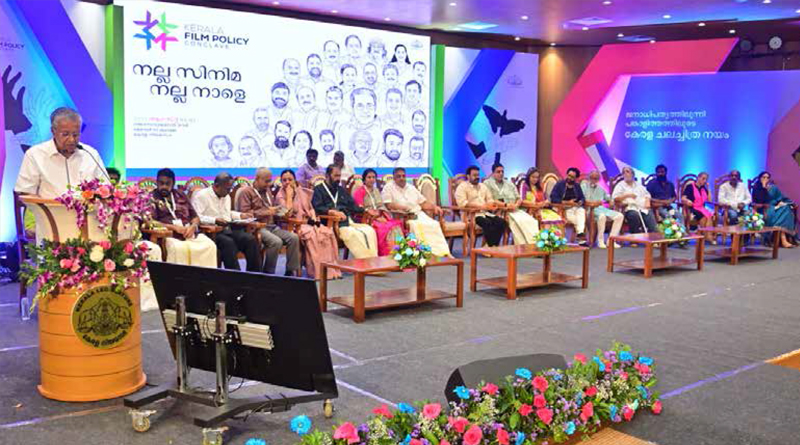
T he vision of late Shaji N. Karun, as the Chairman of the Kerala State Film Development Corporation (KSFDC), paved the way for the idea of Kerala Film Policy. Under his leadership, consultations were held with organisations in the Malayalam film industry, insights were gathered, and a dedicated Film Policy Formulation Committee was formed to formulate a film policy. The comprehensive draft proposals prepared by the committee were presented at the conclave organised at the Kerala Legislative Assembly on 2nd and 3rd August 2025.
T he central premise of the proposed policy revolves around the idea of recognising cinema as an industry, advocating for the rights and needs of its various sectors. The Kerala Cultural Department, under the aegis of the KSFDC and the Kerala Chalachitra Academy, organised this conclave that addresses the collective needs of industry veterans, emerging talents, and technical experts alike. The theme, “Good Cinema, Better Tomorrow”, encapsulated the conclave’s goal of creating an actionable, inclusive policy framework.
T he event commenced with an iconic moment— Kerala’s Chief Minister, Pinarayi Vijayan, marked the beginning of the conclave by striking the clapboard. In his inaugural address, the Chief Minister emphasised the need to safeguard Kerala’s cultural heritage against f ilms that might undermine its integrity, calling for unified resistance against cinematic works that promote communal discord.
T he conclave adopted a democratic approach, encouraging active participation from every sector of the industry. A series of panels tackled crucial issues ranging from gender equity to labour conditions within the industry, with an emphasis on the need for a safe, inclusive work environment.
T he first session, dedicated to gender justice and inclusion, addressed the essential need for equitable working conditions for all genders, progressive implications of implementing the POSH Act (Prevention of Sexual Harassment) within the industry, as well as addressing issues such as maternity leave and childcare facilities. The session discussed on how Malayalam cinema has made strides in achieving gender parity, especially in terms of remuneration based on skill rather than gender.
Another pivotal session focused on labour rights, particularly the unfair working condition of junior artists who often work extensive hours without adequate rest or fair compensation. The intricacies of labour laws and mechanisms for resolving grievances within the prd.kerala.gov.in/publication/keralacalling industry was rigorously examined. The debate centred on reducing taxation on film tickets, which currently faces a staggering 33% tax burden, while OTT platforms remain largely untaxed.
T he use of AI-powered VFX suites and flexible sound stages to elevate production quality also was another session that emphasised on the importance of skill development and the need for a robust pipeline of local talent.
T he conclave also raised pertinent concerns about piracy and the protection of intellectual property. Additionally, there were deliberations on how to transform the Chitranjali studio into a hub for media innovation, with suggestions for a digital single-window clearance system to streamline the regulatory process and reduce bureaucratic hurdles. Further sessions explored the nexus between cinema and tourism, with discussions on how Kerala could capitalise on film tourism to boost both its cultural profile and the local economy. The conclave also looked at innovative ways to incentivise f ilmmakers, including tax rebates and financial aid, to make Kerala an attractive destination for filmmakers globally.
The central premise of the proposed policy revolves around the idea of recognizing cinema as an industry, advocating for the rights and needs of its various sectors.
T he conclave brought together seasoned industry professionals, including the likes of Adoor Gopalakrishnan, Sreekumaran Thampi, Mohanlal, Suhasini Mani Ratnam, Vetrimaaran among others alongside key political figures such as Speaker A.N. Shamsheer, Finance Minister K. N. Balagopal, Minister for Cultural Affairs Saji Cherian and Minister for Health, Women and Child Development Veena George as keynote speakers and esteemed figures such as Syed Akhtar Mirza, Ashish Kulkarni, Beena Paul, Revathy, Seethal Shyam, Govt officials such as Dr. K. Vasuki and P. Sathidevi and veteran journalist Shashi Kumar of the Asian College of Journalism as moderators and panelists.
As the curtains fell on the Kerala Film Policy Conclave, the sentiment echoed by Mohanlal during his opening remarks resonated strongly: “Malayalam cinema is ours.” While certain areas of reform remain a work in progress, there is a collective belief that with this newfound vision, Malayalam cinema can indeed create a better tomorrow.
T he author is Director at Directorate of Culture and MD at Vizhinjam International Port