

Responding to Maritime Fears
- Sini K. Thomas
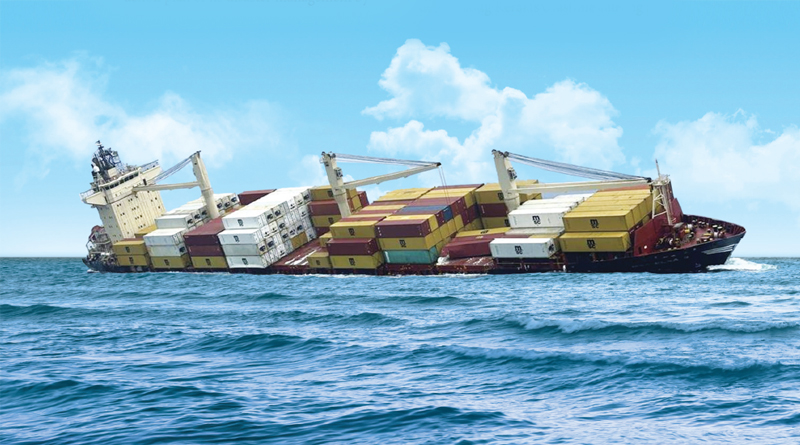
The tragic sinking of the MSC Elsa 3 off the coast of Kerala could have cast shadow over at least one million people who derive their livelihood directly or indirectly from fisheries. While, anxiety over tribulations tremoring, another ship, the Singapore-flagged merchant vessel MV Wan Hai 503, caught fire, off the Beypore coast on June 9. The government of Kerala quick started action plan of its disaster management by declaring ‘the wreckage of ship MSC Elsa 3 in the Arabian Sea 14.6 nautical miles off the Kerala coast as a State-Specific disaster’ as a GO issued on May 29, 2025 reads. The ship carrying more than 643 containers was reported to have capsized on 24th May 2025 off the Kerala Coast near Thottappalli in Alappuzha District.
This raised serious environmental concerns including the potential threat of oil spill and drifting of debris along Kerala’s coastline causing a potential serious environmental, social, and economic impact. The sinking of MSC Elsa 3 created a severe disruption in the livelihood of thousands of fishermen in the four coastal districts: Thiruvananthapuram, Kollam, Alappuzha and Ernakulam. Widespread panic over the catastrophe whether it affects the marine life and fishermen community who are otherwise struggling to keep the pot boiling during the toughness of June with the onset of monsoon need to be addressed. “A 52-day long trawling ban to promote marine conservation also was declared soon after the shipwreck, which otherwise also is a practice during breeding season. A possible contamination fear in the society also can affect the market irrationally.
While, DM plans were implemented, we have decided to work in tandem to ease the tension of people at local level,” says Jagadambika Devi, a Fisheries Extention Officer who was assigned impounding duty at Vizhinjam coastal belt that include sea patrolling as well.
In the state, approximately 10.65 lakh fisher folk (comprising 3.17% of the state’s population) —directly or indirectly— derive their livelihood from fisheries using 3,777 mechanised boats, 31,612 motorised vessels, and 3,609 traditional crafts, spread across 222 marine and 113 inland fishing villages. More than 2.4 lakh workers are formally registered with the Kerala Fishermen Welfare Fund Board, with an additional 85,094 engaged in allied sectors such as fish marketing, net repair, and processing. The remarkable feature in the DM plan was the emergency response to supply of essential aid. “This is certainly a difficult time for traditional fishermen. But a speedy response from the Government gave much confidence to them. The list was prepared and sent to the Civil Supplies Department for rations and financial aid was distributed within days,” explains Sheeja Mary, Deputy Director of Fisheries. “Go to sea is an ultimate feeling to all of us. But we must admit that things are quite different now.
During crisis situations we are heard and taken care of,” says Peter, a fisherman from Vizhinjam. “We get aid and support from the government. Each family received Rs. 1,000 immediately and an additional 6 kilograms of rice per family to mitigate the loss of livelihood. For each family this may not be a big amount. But we are heard collectively and the government responded immediately. This is great relief,” he added. The Chief Minister of Kerala convened a meeting with key officials On June 3, 2025, where a decision was made to provide interim relief to the affected 1,05,518 fishing families, which included 78,498 traditional fishermen and 27,020 ancillary workers. The financial aid of Rs. 1000 per family was released through the State Disaster Relief Fund (SDRF). A total of 54.93 crores was earmarked for compensation to those who lost income during the period from May 25 to June 1, 2025, while 45 lakh was allocated for the study of the water and seafood samples.
The government also swiftly mobilised a multi-agency response to assess the damage, prevent further environmental harm and support the affected fishing communities. By May 27, 2025, a crucial meeting chaired by the Minister for Fisheries was convened with key stakeholders such as the Minister for Health, the Secretary of Health, Fisheries Special Secretary and experts from government agencies like the Pollution Control Board, Food Safety Commission and various central institutions. This collaboration aimed at addressing the urgent risks posed by the sinking of the ship, particularly the threat of contaminated marine resources reaching the shores. The Government constituted a two-tier institutional mechanism at the State and District levels to address and suggest measures to mitigate the impact of the potential coastal pollution with Secretary, the Department of Science & Technology as Chairperson, Director, Environment Department as Convenor and Commissioner, Disaster Management, Special Secretary, Environment Department, Chairperson, Kerala State Pollution Control Board, Representative of the Indian Coast Guard, Representative of National Centre for Earth Science Studies, Member Secretary, KSDMA as members at the state level.
At the district level, the committee was constituted with District Collector as Chairperson, District Hazard Analyst as Convenor and Joint Director, Local Self Government Department, Deputy Director of Fisheries Department, Port Officer, District Agriculture Officer as members. The district level committee will “undertake on-the-spot activities suo moto and on the direction and advice of State Level Pollution Control Committee and all other activities to remove the debris from the drifting containers and cargo on the coast immediately from the sites, where containers are landed and undertake measures to protect the impact of contaminated water with or without oil,” the Government Order reads.
Scientific Analysis and Public Assurance
On June 28, 2025, a roundtable brought together leaders from various fishermen’s unions, representatives from central government agencies and local district officials. The government stressed the urgency of testing and ensuring public safety through rigorous scientific sampling and analysis. The Fisheries Department ensured that samples from the coastal regions were collected and sent for analysis to the Central Institute of Fisheries Technology (CIFT). The results of these tests were encouraging. All seafood samples were found to be safe for consumption, with no signs of contamination or off-putting odours. Followed by this, a fish feast was successfully organised to quash the unwarranted suspicions about the edibility of fish.
Minister for Fisheries and all authorities publicly endorsed that fish is safe for consumption. Subsequently, sales picked up. “The initiatives taken by the government has helped our industry immensely. It has built a lot of confidence in us”, says Charles, a fisherman from Vizhinjam. “Micro plastics accumulated on shore was an issue to be addressed. A joint venture of Aapdamitra, Civil Defence, Haritha Karma Sena, and Kudumbashree was engaged in this mission,” Jagadambika Devi points out. As recovery efforts continue, the focus remains on rebuilding the livelihoods of the affected fishermen while ensuring that the region’s ecological integrity is preserved. As the Kerala coast heals from this unprecedented event, it serves as a testament to the power of collaboration, the resilience of its communities and the unwavering determination to safeguard its natural resources for generations to come. Through the haze of uncertainty, the horizon has slowly become clearer and what lingers is a strong sense of contentment. And it was indeed the efforts taken by the government to quickly address the concerns of the fishing community and stand with them during an unprecedented crisis that helped them sail through.