

Navigating Change: Kerala’s Ports, Devaswom and Cooperative Sector
“Kerala made an indelible mark in world maritime map through the Vizhinjam port. In this decade, comprehensive projects were implemented in the port and cooperation sector to create Nava Keralam. Modernisation was introduced in the Devaswom Department and reforms, including virtual queue system, were implemented for easy darshan for Sabarimala pilgrims.”
-V.N. Vasavan
Minister for Co-operation, Ports, and Devaswoms
 Port Department
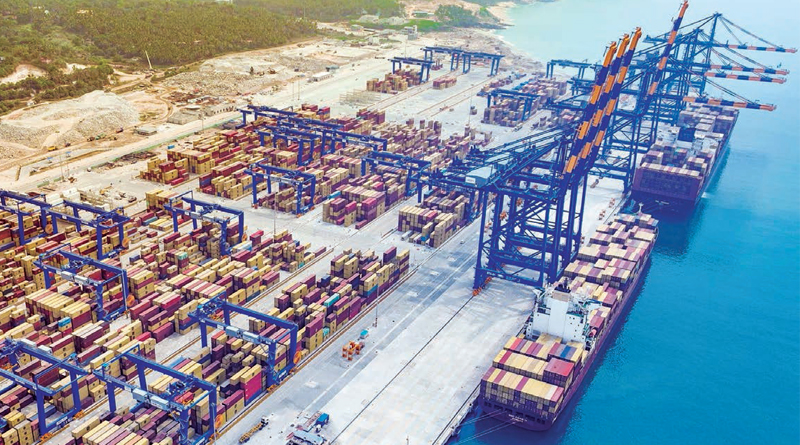
We are moving forward by preparing a comprehensive Maritime and Inland Water Transport Plan by integrating marine transport and inland water transport. The completion of the first phase of the Vizhinjam International Port and its rapid emergence as a global transshipment hub marks a significant milestone in this journey. The construction of the second phase has begun with the necessary steps taken to complete it by 2028. Vizhinjam International Port completed one year of commercial operations with the achievement of handling 1 million TEU cargo in the fastest time in India. Continuous services were handled to various parts of the world including America, Europe, Africa and Asia.
- Vizhinjam Port’s Achievements in a Year
- Fastest port in India to handle 1 million TEU.
- Crossed the maximum capacity of 1 million TEU in just 10 months.
- Handled 665 ships and 1.42 million TEU so far.
- Handled 41 ULCV ships of 399+ meters in length, the most handled by any port in India.
- Handled 154 ships of more than 300 meters in length.
- Handled 45 ships with a draft of more than 16 meters.
- Welcomed MSC Verona with a draft of 17.1 meters, the deepest ship ever handled in South Asia.
- MSC Paloma which holds the record of handling 10,576 TEU in a single ship anchored at Vizhinjam
- Highest GCR (Gross Crane Ratio) in October 2025 at 28.52.
- First port in India to berth the world’s largest container ship MSC IRINA.
- First port in India to have women operating automated cranes.
The tender process for the development of Malabar Port and SEZ in the Malabar region with private participation is in full swing. Various courses under the Inland Vessel Acts have been started at the Maritime Institutes located at Kodungallur and Neendakara under the Maritime Board. Steps have been taken to start medium-sized cruise ship services connecting non-major ports within the state and non-major ports of other states. A sand purification plant is being successfully run in Ponnani under the PPP model. A portal called ‘Kerala Nauka – The IV Connect’ has been launched to implement the registration procedures of inland motorised vessels online. With this, Kerala has become the first state to implement crew licensing of vessels through a central portal. An electronic system has been developed for inspection of vessels.
Department of Cooperation
- The 11th Asia Pacific Cooperative Ministers’ Summit held in Jordan discussed the activities of primary cooperatives in rural areas, Kerala Bank, Uralungal society etc.
- The country’s largest scheduled cooperative bank, Kerala Bank, was formed.
- The Kerala Assembly approved the comprehensive amendment to the Kerala Cooperative Society Act. Following the amendment, the Cooperative Act was also comprehensively amended.
- For the first time in India, the Kerala Cooperative Revival Fund Scheme was launched.
- Under the Risk Fund Scheme, a financial assistance of Rs. 502.20 crore was provided in 9600 loans as postmortem/ medical assistance.
- In the last 10 years, financial assistance of Rs. 1069.32 crore was provided to 16664 applicants.
- Under the Co-operative Members Relief Fund Scheme, Rs. 83,33,95,000/- has been sanctioned to 39837 beneficiaries.
- The amount of protection for deposits in cooperative institutions with Kerala Co-operative Deposit Guarantee Fund Board membership has been increased from Rs. 2 lakh to Rs. 10 lakh.
- The Punarjani scheme is being implemented for Scheduled Caste/Scheduled Class cooperative societies.
- Aksharam Museum has been established in Kottayam. Rs. 14.98 crore has been sanctioned for the next phases.
- Palliative care scheme has been implemented under the leadership of cooperative hospitals. The Paid Palliative Care Scheme is currently being implemented in 23 hospital cooperative societies.
- In the first phase of the Care Home Scheme, which was launched for those who lost their homes in the 2018 floods, 2,093 houses were constructed.
- In the second phase of the Care Home Project, housing complexes are being constructed in 14 districts at the locations specified by the Life Mission. The construction of a housing complex that can accommodate 40 families has been completed in Pazhayannur Grama Panchayat in Thrissur district. The construction of a housing complex that can accommodate 28 families is underway in Kannadi-2 Village in Palakkad district. The construction of a housing complex that can accommodate 18 families in Panniyoor Village in Taliparamba Taluk in Kannur district is also in the final stage.
- Social Security Pension is being distributed to 21 lakhs people through the consortium of primary agricultural cooperative societies.
- Super specialty treatment is provided free of cost to the Scheduled Castes/Scheduled Tribes in the Attappadi region. 6924 people have benefited under the project.
- Rs. 4.30 crores were disbursed under the Sahakaranam Souhrudam entrepreneurial loan scheme for differently abled persons.
- Rs. 13.49 crores were disbursed in 6643 loans for starting small, roadside businesses and small enterprises and for purchasing autorickshaws.
- In the last four years, 16390 appointments have been made in the Cooperative Department, Cooperative Societies and Kerala Bank.
- About five lakh employment opportunities have been created through startup/MSME enterprises started using loans provided by Kerala Bank and other Cooperative Banks.
- The first nursing college of the Cooperative Academy of Professional Education has started functioning in Alappuzha.
- A material bank, which provides materials required for the construction sector at reasonable prices, has started functioning in Velliyur.
Revenue (Devaswom) Department
The highest amount of money has been allocated to the Travancore, Cochin, Guruvayur, Malabar and Koodalamaranikam Devaswoms in the last ten years. The amount allocated to various Devaswom Boards in the state from 2016-17 to September 2025 is Rs. 640 crores.
- Travancore Devaswom Board 145,40,00,000/
- Cochin Devaswom Board – 26,38,33,153/
- Malabar Devaswom Board4 – 3,04,85,85,709/
- Koodalmanikyam Devaswom – 4,15,00,000/
- Sree Padmanabhaswabhi Temple – 3,47,00,000/
- Sabarimala Master Plan Project – 85,45,67,330/
- Sabarimala Sanitation Project – 21,86,05,442/
- Hindu Religious Institutions Administration Department – 27,85,25,635/
- Devaswom Recruitment Board – 20,75,78,747/
- Projects for construction and renovation of halting places for Sabarimala pilgrims – 116.41 crores
Development of Sabarimala
This is the period when the government and the Devaswom Board have stood together with the devotees for a smooth pilgrimage and initiated projects including the Sabarimala Airport Project, the Sabarimala Master Plan, and the Global Ayyappa Sangamam to ensure the participation of devotees in matters related to Sabarimala development. Projects worth Rs. 1033.62-crore have been approved for the development of Sabarimala. The government has spent Rs. 148.5-crore on various development projects for the Sabarimala Master Plan. Construction work worth Rs. 600.47-crore will be spent in the first phase and Rs. 100.02-crore for the second phase. The layout plan has estimated Rs. 778.17-crore for the development of the Sannidhanam, including Rs. 77.68-crore for the third phase. A total of Rs 207.48-crore is expected for the development of Pampa, including Rs 184.75-crore in the first phase and Rs 22.73-crore in the second phase. In addition, Rs 116.41-crore has been spent over and above the budget with the help of KIIFB on the construction of halting stations. Halting stations have been constructed at Kazhakoottam, Chengannur, Chirangara, Erumeli, Nilakkal and Maniyangode.