

Historic Progress in the Health Sector
“Kerala’s health sector has achieved remarkable strides over the past decade,emerging as both a national and global benchmark for accessible, highquality care. The state has invested sustainably in infrastructure, manpower and innovative schemes, and has achieved near-universal coverage and pioneered advanced treatments, while reducing key mortality rates; expanding free services to millions. Equally commendable are Kerala’s strides in food security. The state consistently ranks first in the National Food Security Index, driven by its robust public distribution system, community-based initiatives, and strong nutritional programs.”
-Veena George
Minister for Health and Woman and Child Development
 Kerala leads India’s health care revolution delivering free care worth ₹8,425-crore to 24.78-lakh beneficiaries through flagship initiatives such as KASP, Karunya Benevolent Fund, and Arogyakiranam plus. Other than this, over ₹3,300-crore worth free medicines through Kerala Medical Services Corporation Ltd. (KMSCL) ensure quality treatment reaches every section of society. We have managed to achieve world-class outcomes like infant mortality rate at a level of 5, which is lower than that of the USA, and the lowest maternal mortality nationwide. Kerala has also made history in advanced medical procedures within the government sector. We have created history by successfully performing robotic surgery, pediatric robotic surgery, and liver transplants in the government sector. Ernakulam General Hospital pioneered India’s first district-level heart surgery and valve replacement without opening the heart. It also started the country’s first district-level kidney transplants. Together, these milestones showcase Kerala’s commitment to accessible, cutting-edge healthcare, proving that a strong public health system can deliver both equity and excellence.
Milestones
• Implemented CARE scheme as a critical step in rare disease treatment.
• In health sector, 10,653 posts created; 8,076 posts during previous government and 2,577 during this government.
• Aarogyam Aanandam – Eliminate Cancer mass cancer prevention campaign screened 21.69 lakh people so far.
• First state to release an Anti-Biogram.
• Launched Operation AMRITH to curb antibiotic overuse.
• Established e-Health in over 1,000 institutions.
• Through Hridyam scheme, free heart surgery provided to over 8,700 children.
• Implemented Hub and Spoke Model Lab Network making lab results available via SMS.
• Established Kerala Centre for Disease Control and Prevention (Kerala CDC) for communicable and noncommunicable disease prevention.
• Kerala One Health Centre for Nipah Research set up at Kozhikode Medical College.
• Health sector moves to AI: Thiruvananthapuram General Hospital becomes India’s first district-level hospital installing G-Gaiter.
• Set up dental units in all taluk hospitals.
• Launched state-wide ultra-modern blood bag traceability system.
• Peritoneal dialysis project launched in 14 districts, enabling free home dialysis for patients.
• VIVA campaign launched to ensure malnutrition-free Kerala
• Free stroke treatment system implemented in 12 districts.
• Strengthened e-Sanjeevani services, allowing specialty consultations.
Palliative Care
• Kerala proved to be a successful model in palliative care, praised by WHO.
• Implemented universal palliative care scheme and ‘Kerala Care’ palliative network.
• Implemented Palliative Care Grid system integrating government and voluntary sector units.
• 1,141 primary palliative care units operational in government sector.
• 113 secondary-level units in major hospitals under Health Department, plus 231 in Community Health Centres.
• Palliative care units in eight medical colleges, RCC and MCC.
Health Services
• 5,415 People’s Health Centres established.
• 380 urban People’s Health Centres across 93 urban areas.
• For the first time in the country, special clinics for women set up in 5,416 People’s Health Centres.
• All Urban Primary Health Centres upgraded to Health & Wellness Centres.
• 750 Primary Health Centres converted to Family Health Centres.
• CATH Lab operations started in Kasaragod, Wayanad districts, Adimali Taluk Hospital, Idukki District Hospital and Idukki Medical College.
• Approval was secured for four medical colleges (Konni, Idukki, Wayanad, Kasaragod). This has made 300 MBBS seats available at government fees for students. In the private sector, a total of 400 MBBS seats were added during this government’s term.
• Every district now has both a medical college and a nursing college.
 Care for Tribal Areas
• Started hospital operations in Idamalakudi and Chattamunnar (Idukki) with 8 posts each.
• Upgraded Kottathara Tribal Specialty Hospital to Taluk Headquarters Hospital.
• Prepared special intervention plan for Attappadi.
• Formed women’s groups under each anganwadi
• 28 People’s Health Centres started in Attappadi.
• Level 3 ambulance, 16-slice CT scanner, and first breast cancer surgery at Kottathara Hospital.
• 108 ambulance service for sickle cell patients.
Cancer Care
• Launched Karunya Sparsham zero-profit anti-cancer drug counters.
• Free cancer treatment via Karunya Health Security Scheme, Karunya Benevolent Fund, etc.
• Allocated ₹1,400 crore for free cancer treatment in past 4 years under this government.
• Formed Cancer Grid and Cancer Care Suite for cancer diagnosis and treatment coordination.
• Cancer treatment facilities added in 25 hospitals in addition to major hospitals.
• Upgraded Malabar Cancer Centre to Postgraduate Institute of Oncology Science & Research with ₹562.25 crore KIIFB funding.
• First government-sector Lutetium therapy at RCC.
• Digital pathology Centres of excellence at RCC and MCC.
Major Advances in AYUSH Sector
• Allocated over ₹1,500 crore for AYUSH development.
• First phase of International Ayurveda Research Centre in Kannur underway.
• Created 116 posts in Ayurveda treatment.
• 40 Medical Officer posts in Homoeopathy Department.
• Appointed 1,400 people, including yoga instructors and GNMs, across 700 AYUSH Health & Wellness Centres.
Women & Child Development
• The Supreme Court of India praised Kaval and Kaval Plus schemes for ensuring mental, physical, social well-being of children unable to adjust to law and reintegrating them into society.
• UN Women commended Kerala’s women empowerment efforts.
• State Women Development Corporation provided direct/indirect employment to over 5 lakh women.
• Amended dowry prohibition rules; appointed Dowry Prohibition Officers at district/block levels; set up online portal for complaints/reports.
• Women Development Corporation hostels started in majority of districts.
• Introduced new Nirbhaya Policy.
• Built model SOS Homes for POCSO survivors.
• First POSH compliance portal introduced for online complaints against workplace sexual harassment.
• Branded products made by survivor children under Tejomaya scheme marketed through retail store at Kakkanad.
• Introduced Dheera scheme to build confidence/ courage in girls from childhood.
• Implemented Ente Koodu scheme in four major cities; expanding to other district HQs.
• 123 Smart Anganwadis established.
• Conducted gender audit of anganwadi books.
• Prepared model food menu in anganwadis, including egg biriyani, vegetable pulao, etc.
• Launched Kunjoos Card to assess children’s physical/ mental growth.
• Creche scheme for childcare at workplaces.
• Vanamitra women empowerment scheme for tribal women.
Kerala State Women Development Corporation
Vanitha Mitra Kendra
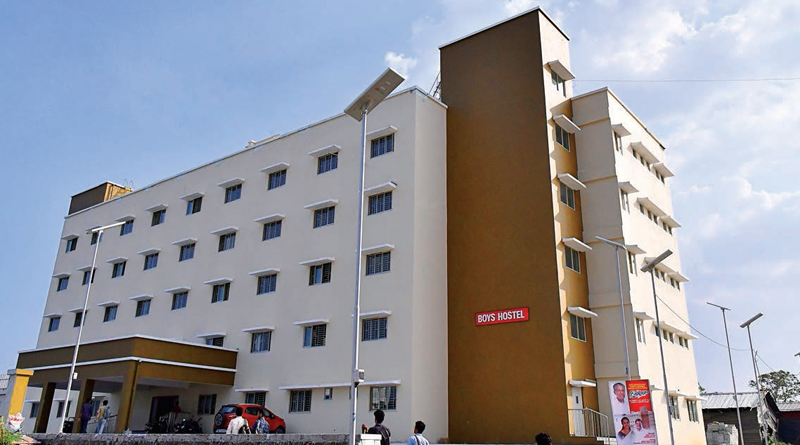
To provide safe, affordable accommodation for working women, four new hostels opened at Ernakulam (Kakkanad), Malappuram (Perinthalmanna), Palakkad (Noorani), Pathanamthitta (Kannankara).
Menstrual Hygiene
She Pad scheme benefited over 6 lakh girl students in 2,500+ government/aided schools.
Escalera Expo
Organised Escalera Expo sales fairs in Kozhikode and Thiruvananthapuram for women entrepreneurs’ products; benefited 250 entrepreneurs.
Kerala Women’s Commission
• Submitted draft guidelines to government for gender equality in media.
• Conducted camps to understand issues of women in SC/ST, coastal, plantation sectors.
Child Rights Protection Commission
The Commission monitors CWC and Juvenile Justice Board for child safety and effective JJ Act implementation. Organised awareness seminars, Happiness program and Children’s Conclave to showcase talents of children.