

Fish, Fields and Futures

Sajimon P. S.
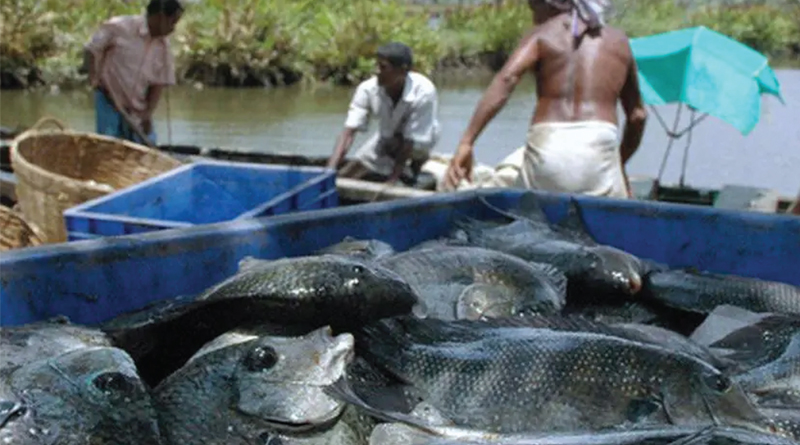
Nestled within the serene landscapes of Kerala’s Alappuzha district, a quiet revolution is stirring the waters—both literally and figuratively. Along the banks of Kottachaal, the ‘Changathikkoottam’ Self-Help Group (SHG) has scripted a compelling story of community resilience, sustainable enterprise, and rural innovation through an ambitious embankment fish farming venture. Launched in February 2024, this initiative marks the first of its kind in the district. With the guidance of Kerala’s Fisheries Department and the support of the ‘Janakeeya Matsya Krishi’ scheme, their efforts have not only yielded a remarkable harvest of 2,800 kilograms of pearl spot (Karimeen) but have also set a precedent for environmentally conscious aquaculture across the state.
The Changathikkoottam group, embarked on their aquatic endeavour by releasing 5,000 fingerlings each of Karimeen and Varaal (banded snakehead) into a one-hectare stretch of public water at Kottachaal. The approach was rooted in scientific methodology—utilising floating feed, administered bi-daily, and adhering to low-impact, eco-friendly farming practices. Unlike conventional aquaculture, embankment fish farming involves the temporary construction of bunds within existing water bodies, allowing fish to be reared without disrupting the natural flow of canals and streams. Within eight to twelve months, the fingerlings matured to a marketable size of 300–400 grams, fetching a profit of approximately 5 lakh—testament to both the technique’s viability and the insatiable local demand for native fish varieties.
The official harvest ceremony, graced by Kerala Fisheries Hon. Minister Saji Cherian, was not just a celebration of fish—it was a celebration of self-reliance, ecological stewardship, and grassroots entrepreneurship. With the success of Kottachaal the government envisions expanding this model across 50 hectares statewide. In Chengannur alone, two hectares have already adapted the method. Jalanidhi Matsya Karshaka Group, another SHG has initiated a project in the Changappadam canal, stocking 1,000 Karimeen and 9,000 Varaal fingerlings promising similar dividends in the near future. Financial viability is further bolstered by substantial government subsidies.
SHGs receive up to 60% of the initial-15 lakh required for a one-hectare project, covering critical costs like feed, fingerlings, and site preparation. An additional 20% subsidy is available for recurring essentials. The minimum commitment period is three years, ensuring continuity and sustainability. More than just a successful pilot, the Changathikkoottam initiative is an exemplar of how scientific knowledge, state support, and community spirit can transform untapped resources into engines of local prosperity. By converting Kerala’s water bodies into thriving centres of aquaculture, these groups are not just cultivating fish—they’re cultivating futures.
-The writer is Assistant Information Officer at I&PRD, Alappuzha