

Empowering Communities

A systematic collective response attracted media attention globally during the devastating floods in Kerala in 2018. BBC reported how the civil society responded through social media to locate people and extended support. According to The Guardian “residents of the State used social media to post desperate appeals for help, sometimes, including their GPS coordinates to help guide rescuers”. The role of collective action and citizen led volunteering activities in responding to the great deluge in Kerala, as a research paper published in Jstore states, is “yet another example of how community resilience is a life saving example”. Thus, the government of Kerala got it done by volunteering the involuntary task force with the formation of the Civil Defence system, for better utilising the potential of the best human development indices in India.
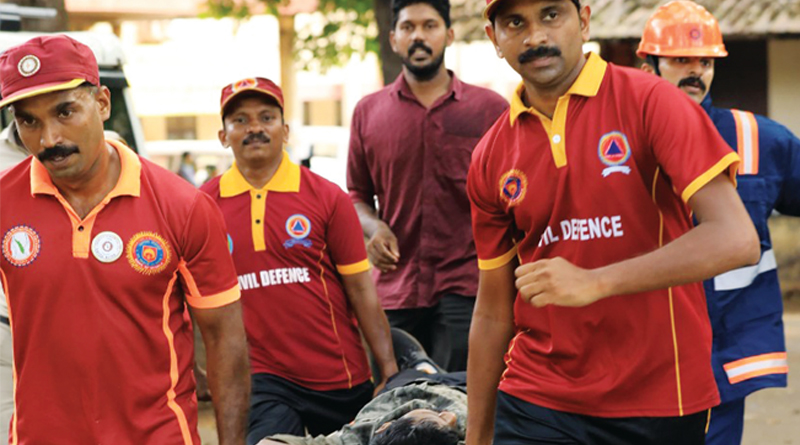
Being one of the most effective community-led disaster preparedness and response, the Civil Defence volunteers are now the trained citizens to become first responders to disasters. The results; the Civil Defence volunteers actively responded to disasters in Pettimudi landslide in 2020, the Brahmapuram waste plant fire accident in 2023 and landslides in Chooralmala in 2024. In the first phase, the state recruited 6,450 Civil Defence Volunteers, including 970 women, from diverse backgrounds. These volunteers included Ham Radio operators, IT professionals, paramedical staff, JCB operators, and other skilled workers. In the second phase, an additional 3,300 volunteers were added and currently they are undergoing training.
All volunteers receive 15 days of structured training, which includes flood rescue techniques, basic fire-fighting, first aid, casualty care and other critical rescue operations. Practical sessions held at the Civil Defence Academy in Viyyur teach skills in building improvised floating devices, rowing and constructing Burma and Commando bridges for rope-based rescues. The volunteers are provided with uniforms, PPE kits, ID cards and other essential equipments. The Civil Defence Volunteers have played a vital role during several emergencies:
• COVID-19 Response: Volunteers disinfected public spaces, delivered food and medicine to vulnerable populations, and assisted in transporting COVID-19 patients.
• Communication Support: Trained Ham Radio operators among the volunteers were instrumental during landslides and the Sabarimala pilgrimage season, providing reliable communication support.
In addition to emergency response, volunteers are involved in risk assessment activities. They work alongside Fire & Rescue personnel to inspect floodprone and accident-prone areas and conduct awareness programmes to educate the public on disaster preparedness. With Civil Defence Volunteers the State is building a more responsive society—ready to face emergencies with strength and solidarity.
-The writer is Regional Fire Officer at Civil Defence