


Aiming for Academic Excellence
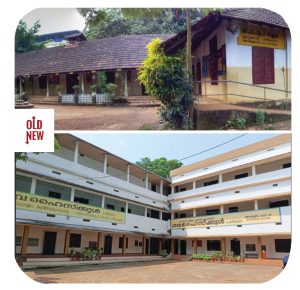
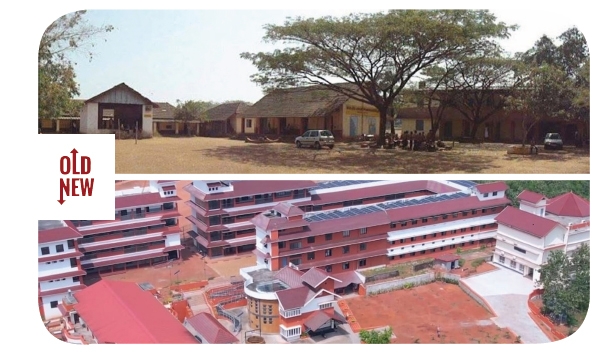
Public schools that are stable and well endorsed by the government are essential for a democratic society. Public education plays a major role in instilling fundamental values such as secularism and democracy, and human values such as solidarity, cooperation and compassion in the society. Therefore, the stance taken by the consecutive Pinarayi Vijayan governments is that public schools should not be closed, but should be strengthened and developed into centres of excellence. Public education in Kerala is a huge network consisting of nearly 13,000 schools, 45 lakh students, 1.8 lakh teachers and more than 20,000 non-teaching staff. Our state offers every child the facility to study up to class 12 near the vicinity of home. The Public Education Protection Mission launched in 2017-18 and its follow-up, the Vidyakiranam Mission, have changed the face of public education. It is important to note that these achievements of Kerala come at a time when the central government is implementing a National Education Policy that prioritises market logic and encourages private institutions. By overcoming financial difficulties, Kerala is developing public education by ensuring equality of opportunity for all children. Schools, classrooms and learning systems have been extensively modernised. There has never been Vidyakiranam Aiming for Academic Excellence a period since the formation of the state, when so much attention has been paid to the development of facilities and academic matters. The development of facilities was made a reality with the financial assistance of KIIFB.
Technology Access for All
 The United Nations has pointed out that Kerala is a model for the world in providing technologyfriendly education to all children. Kerala has succeeded in implementing the government’s vision that every child should have equal opportunity to access information technology without economic, social or gender discrimination. In a world where digital divide is real, Kerala developed a model of universalising technology. We have provided broadband internet facilities in all schools in Kerala. More than 50,000 classrooms (from standard 8 to 12) have been made technology-friendly. Computer labs have been set up in primary and upper primary schools. In addition to these, tinkering labs and robotics labs have been set up in schools. Teachers and students have been trained in Artificial Intelligence. Teachers have also been provided with training on how to incorporate technology into learning activities. Another activity worth mentioning is cyber security training for mothers. Special training has been arranged to introduce technology to 3 lakh mothers through Little Kites IT clubs led by children in schools. The training was organised by the Little Kites members of each school along with the Kite Master teachers. Training was given in areas such as ‘Fake News Identification-Fact Checking’, which helps in detecting, identifying and verifying fake news and internet scams.
Comprehensive Quality Education Plan
To implement school activities more efficiently schools are adopting a methodology of formulating comprehensive academic master plans and arranging activities accordingly. These academic plans will be helpful for detailed academic planning. It is only through progress in academic field can we achieve excellence in school education.
Structural Changes
If academic changes are to be sustainable, structural changes are also essential. Steps are being taken to bring about timely changes in the school education structure as per the recommendations of the expert committee appointed by the government.
Learning support projects
A learning support project called Malayala Thilakkam was implemented for children facing difficulty in learning Malayalam. Hello English project was implemented for English language
learning and Sureeli Hindi project for Hindi learning. Various projects were implemented for science, mathematics and social science. Projects like Ullasa Ganitham, Ganitha Vijayam and Menma have been designed and implemented for mathematics learning. These learning support projects have been useful for progress in learning in various subjects.
Manchadi project
The Manchadi project is an in-depth mathematics learning method that helps children learn mathematics in a fun way. The approach is to comprehensively study the mathematical concepts in the textbook using innovative learning tools. The project is implemented with the co-operation of Kerala Development and Innovation Strategic Council (KDISC). This project, which was implemented in 100 schools in the first phase, will be expanded to 1400 schools.
Mazhavillu
The Mazhavillu project aims to help children develop a new methodology for studying science. This project is currently being implemented with a focus on model residential schools.
Child Scientists
Child Scientists is a project that identifies scientific talents in higher secondary classes and provides them with scientific training. This project is being implemented state-wide using the academic facilities of colleges. The children who excel in this are given the opportunity to experience the infinite possibilities of knowledge through camps at top research institutes like IISER.
Reading
Extensive reading and reference are essential for children to learn in the changing times. To facilitate this, schools are focusing on creating class libraries, expanding school libraries and conducting various activities that encourage book reading.
Varna Koodaaram
A learning environment that enables the multifaceted development of children is essential during the preschool period. The Varna Koodaarams set up by Samagra Shiksha Kerala are a valuable contribution in this direction. Varna Koodaarams have been set up in about 1200 schools in the state. These are active spaces that stimulate all areas of physical, mental, emotional and social development of children.
Skill Centres
Skill development centres explore how employability can be integrated into the final stages of school education. Major changes in the approach and attitude towards employment are essential. These centres can be seen as a step towards that.
Local Skill Centres and Community Education Centres
Local skill centres and community education centres are functioning for socially disadvantaged children who need academic support. Through this, necessary arrangements have been made for academic activities outside school premises. About 720 local skill centres are functioning.
Transforming Teaching
The prerequisite for quality education is to have teachers who have in-depth knowledge in the subject areas taught and the skill and attitude to communicate that knowledge in a way that children with different learning speeds can follow. The development of science and technology is happening in a fast pace. This certainly influences teaching and learning activities. Therefore, the way of teaching needs to be reformed. The discussions on educational reforms cannot be carried forward without recalling the experience of the world-renowned model of engaging children during the Covid pandemic. While filtering and inattention continue to be the hallmarks of market education, it is our duty to strengthen the schools of thought that strive to maintain our education system inclusive and progressive. The past 9 years of the transformation of public education system definitely provides the experience and energy to fulfil this duty.