

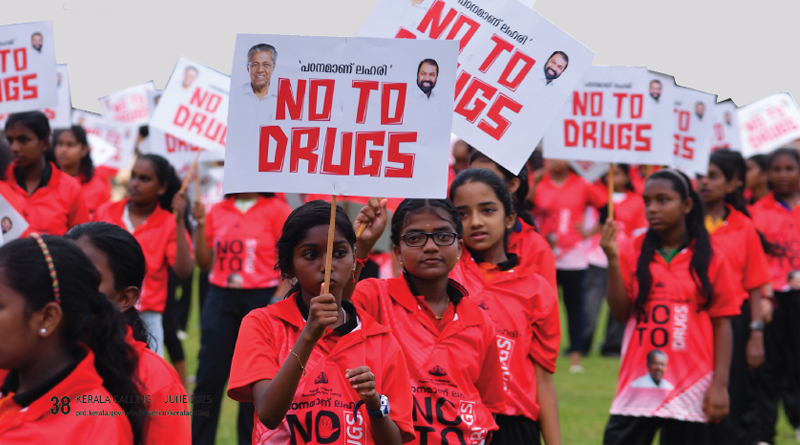
Addiction’s grip Justice’s gavel

Drug addiction, also known as substance use disorder, is a condition that disrupts a person’s brain and behaviour, making it difficult to stop using legal or illegal drugs. It is a serious issue that affects public health, safety and national stability. In India, drug control is mainly governed by the Narcotic Drugs and Psychotropic Substances (NDPS) Act, 1985, which sets the legal framework to regulate and prevent drug-related crimes.This Act aims to create strict laws around the handling of narcotic and psychotropic substances, including their production, possession, sale and transport. It also focuses on seizing property linked to illegal drug trade and aligns with international drug control treaties. The Abkari Act also deals with certain liquid drugs. Legally, the term ‘narcotic’ refers to drugs like opium, cannabis and cocaine, which can be addictive and have strong effects on the mind and body. However,the legal definition is broader than the medical one. Section 2(vi) of the NDPS Act defines narcotic drugs to include coca leaves, cannabis (hemp), opium, poppy straw and other manufactured drugs. Section 2(xxiii) describes psychotropic substances as any natural or synthetic substance listed in the NDPS Schedule, such as amphetamines, ketamine, diazepam and alprazolam.
Ensuring Strict Compliance
The NDPS Act enforces drug laws through strict penalties and policing. According to Section 2(vii a), a ‘commercial quantity’ refers to a drug amount larger than what the central government notifies. Section 2(xxiiia) defines a ‘small quantity’ as anything less than the notified amount. Cases involving commercial quantities are considered serious and are non-bailable under Section 37. However, courts may grant bail if the accused is found unlikely to commit further offences. Section 31A was inserted into NDPS act 1985 to provide for capital punishment or 30 years of imprisonment for habitual offenders on the discretion of the judge. The punishment under Sections 15 to 23 of the Act depends on the type and quantity of drugs involved. There are three levels:
- Small quantity: Up to 12 months rigorous imprisonment or a fine of `10,000 or both.
- Intermediate quantity (more than small, less than commercial): Up to 10 years in jail and 1 lakh fine.
- Commercial quantity: Minimum of 10 years; upto 20 years of rigorous imprisonment and a fine of 1–2 lakh.
Complicity is Culpable
Even if someone doesn’t directly handle drugs, they can still be punished under the NDPS Act. If a person knowingly allows their property to be used for drug activities, they face the same punishment as the offender. The same applies to those who try, plan or help commit drug offences—including cases of abetment or criminal conspiracy. If someone is caught preparing to commit a drug crime, they will receive half the punishment of the crime they were preparing for.
Imprisonment for Drug Usage
Drug users are also treated as offenders under the NDPS Act. If a person is caught using hard drugs like heroin, morphine or cocaine, they face up to one year in prison or a fine up to `20,000 or both. For other drugs, the punishment is up to 6 months in jail or a `10,000 fine. However, there is a provision for immunity. If a drug addict voluntarily seeks treatment, they may be protected from legal action, which encourages rehabilitation over punishment.
Efforts to Curtail Drug Use
India’s battle against drug abuse is not just legal—it is also social and medical. The government leads efforts to reduce demand for drugs through programmes focused on prevention, diagnosis, treatment, rehabilitation and community awareness. To understand how widespread the problem is, a National Survey on the Extent and Pattern of Substance Use was conducted to assess how many people are affected and what substances they use. Several ministries, including Health & Family Welfare, Finance, Social Justice, and Youth Affairs & Sports, run media campaigns and awareness programmes. A national toll-freehelpline (1800-11- 0031) is available to assist drug users, their families and the public.
Victims or Offenders?
Drug users are often both victims and offenders. Their addiction leads to physical, mental and emotional damage, making them victims of their own condition. At the same time, the law treats them as offenders. These cases are sometimes considered ‘victimless crimes’ because they don’t directly harm others. Still, drug users suffer from stigma, not only from society but also from the legal and medical systems. Instead of focusing only on punishment, authorities are treating drug users as individuals in need of help, supporting treatment and rehabilitation to prevent repeat offences.