

A Quantum Leap to Blue Revolution

P. I. Sheik Pareeth IAS (Rtd)
Redefining Quality, Hygiene and Accessibility in the Domestic Fisheries Trade
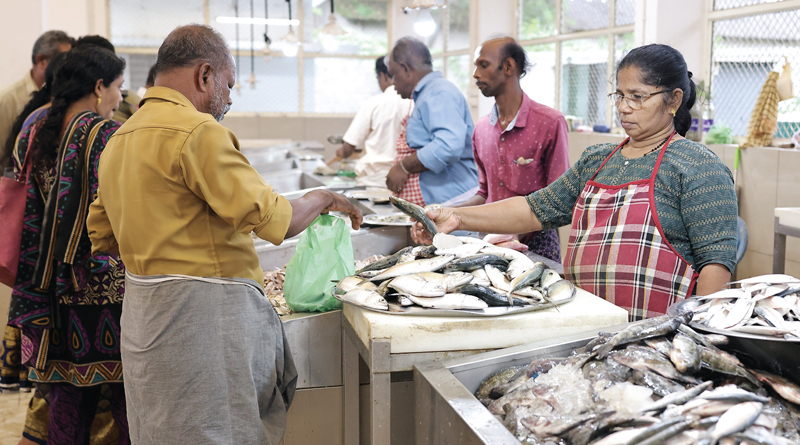
Fish markets are no longer just transactional spaces at least in Kerala. With strategic planning, introduction of modern infrastructure and active community participation the State has set a national benchmark to the stage II Blue Revolution by redefining traditional fisheries sectors into people friendly high tech retail centres. Having contributed to the food security of the State, fishing communities now symbolise Kerala’s commitment to public health, women empowerment and economic resilience. Traditionally, the marketing of fish in Kerala has been rooted in decentralised, informal and community-driven systems which lacked infrastructure, cold chain logistics and access to market spaces. Coupled with poor sanitation, post-harvest losses, food safety risks, caused marginalisation of fish vendors, especially the women folk who often ended up with selling fish at unhygienic roadside stalls or open market places. This, in the recent past, shifted to a silent revolution sweeping across the state a transformation in marketing, handling, storing and selling of fish.
Advent of modern technologies in the fisheries value chain, greater public awareness about health and hygiene, rising consumer demand for safe and quality food, and an increased emphasis by the government on infrastructure-led inclusive growth accelerated this paradigm shift. Kerala State Coastal Area Development Corporation (KSCADC), the guiding force behind this, conceptualised, designed and executed innovations, inclusivity, and modernisation in the fish marketing domain in collaboration with the Department of Fisheries. KSCADC has introduced a new package of state-of-the-art hygienic fish markets chains, blended tradition with technology, heritage with hygiene and tailored to the specific needs of each location while ensuring universal standards in quality and infrastructure offering vendors livelihoods with dignity.
Thus, the Corporation ensured scientific handling and sanitation, infrastructure development that supports cold storage, waste management, and clean vending spaces. These initiatives helped in reshaping mindsets through upgrading physical spaces while, materializing its mission to empower fish vendors (especially women), to ensure fair prices for producers and buyers, to reduce post-harvest losses, and to make safe, hygienic, and affordable fish available to all segments of society. KSCADC has successfully completed 40 modern, hygienic fish markets with the financial support of the National Fisheries Development Board (NFDB) and the State Government. Another 51 more world-class fish markets worth Rs. 142-crore are under construction with the support of the Kerala Infrastructure Investment Fund Board (KIIFB). These markets are envisioned as centres of trade as well as vibrant, inclusive community spaces — thoughtfully designed to uphold public health, commercial dignity, and equitable access. Each facility stands for Kerala’s commitment to create progressive infrastructure that empowers people, safeguards quality and redefines the standards of domestic fish marketing. Salient features of these modern fish markets include:
• Dual Facilities for Wholesale and Retail Trade: Dedicated auction halls, unloading bays, and bulk handling systems, ensuring efficient movement and fair pricing mechanisms.
• Hygienic Retail Units: Individualised vending spaces, each with dedicated display units, stainless steel sinks, running water supply, drainage connections, and seating arrangements.
• Infrastructure Supporting Cold Chain and Sanitation: Freezer rooms, flake ice machines, potable water units, antiskid flooring, effluent and sewage treatment plants, and solid waste disposal systems, significantly reducing the risk of contamination and improving shelf life.
• Customer-Friendly Design: Ergonomically planned with a focus on customer comfort, parking facilities and aesthetic layouts, thereby attracting more consumers and improving the market experience.
In addition, two monumental, state-of-the-art fish market consortiums, each with an estimated investment of Rs. 50 crore have taken shape in Aluva and Kozhikode, laying new milestones in Kerala’s fish marketing infrastructure. These flagship projects are envisioned as integrated mega-markets, where the entire spectrum of fish and fisheryrelated products — from freshly caught marine and inland fish, value-added products, dry fish, and shellfish, to ready-to-cook and processed items — can be availed under one modern, hygienic, and customer-friendly roof.
Designed as comprehensive trade and service hubs, these mega-consortiums too are equipped with all the facilities offered in other modern fish markets which are already functional and food courts — offering a world-class fish shopping and trading experience to both bulk buyers and walk-in consumers. With over 85% of Kerala’s total fish catch consumed domestically, robust market systems are pivotal to the sector’s sustainability. Moreover, with increasing international trade regulations and periodic fluctuations in global demand, the importance of a reliable, accessible and hygienic domestic market cannot be overstated. By investing in world-class infrastructure at the grassroots level, Kerala is creating a resilient value chain that protects both producers and consumers emerging as a model to be emulated.
-The writer is Managing Director at KSCADC