


A Path for Tribal Development
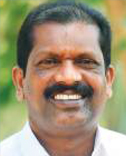
O.R. Kelu
Minister for Welfare of Scheduled Castes, Scheduled Tribes and Backward Classes
Kerala’s transformative approach to tribal and backward community welfare is setting new benchmarks in inclusive development and dignity
The government is committed to the upliftment of Scheduled Castes, Scheduled Tribes and other backward communities through a range of targeted welfare and development initiatives. T he various programmes focusing on education, healthcare, housing, employment and infrastructure development ensure that these communities experience considerable positive changes in their lives.
Land and Housing for All
T he government has made significant strides in providing land and housing to landless Scheduled Caste and Scheduled Tribe families. In the last nine years, the government allotted 1,653 acres of land for 33,058 Scheduled Caste families for building houses. Another major initiative is that the age limit for applying under the landless housing rehabilitation scheme was increased from 55 to 70 years, and the income limit for applying was also increased to Rs 1,00,000, making more people eligible for assistance. Notably, Thiruvananthapuram has become the first district in the country where every Scheduled Tribe family has been allocated land. To further facilitate land distribution for the Scheduled Tribes, the government has come up with various programmes such as the Land Bank Scheme and distribution of Reserved Forest Land. In the past nine years, 8,919 Scheduled Tribe families have been allocated 8,573.54 acres of land, marking a historic achievement in land redistribution for these communities. Under the LIFE scheme (Livelihood, Inclusion and Financial Empowerment), a total of Rs 1,561.3 crore has been allocated for 1,14,610 Scheduled Caste beneficiaries, while Rs 802 crore has been provided to 43,629 Scheduled Tribe beneficiaries. T he SAFE scheme, launched in 2021, aims at renovating dilapidated houses and completing unfinished ones for marginalised families. Financial assistance of Rs two lakh each was given to 20,829 families as part of this scheme. In 2025–26, financial assistance to 10,000 families will be provided. In the last four years, 8,401 Scheduled Caste families have benefited, receiving Rs 2.5 lakh each. Since its launch in 2016, the Ambedkar Village Development Programme has benefited 1,062 villages. Through the Rs 1,037.89 crore corpus fund, significant investments have been made to develop basic infrastructure in these remote areas.
Redefining Education and Employment in a Changing World
T he government is committed to expanding educational opportunities and employment prospects for students. Right from pre-primary education to PhD, the government gives them constant support. Scholarships are also provided for courses in autonomous institutions like IITs and IIMs, as well as for professional courses such as CA, CS and ICWA. The government also offers scholarships to meritorious students studying outside the state, allowing them to pursue higher education at top universities across the globe. In total, 14 lakh students have received scholarships in various academic fields. T he Unnathi Scholarship for Overseas Studies scheme has opened up global educational opportunities for 842 students, who are now pursuing their studies at prestigious international universities. T his scholarship has benefited 731 Scheduled Caste students, 54 Scheduled Tribe students and 57 Other Backward Class students. Meanwhile, the Study Room Scheme, initially available only to students in classes 8 to 12, has been expanded to include students from the fifth class since 2022. Now, it also includes students studying in Kendriya Vidyalaya schools. In the last nine years, the government has allocated Rs 80.47 crore for 40,236 study rooms, providing Rs two lakh each for their establishment. In Scheduled Tribe villages, 364 social study rooms have been completed. T he government also provides scholarships for promoting career growth on professional lines for the marginalised communities. Each year, scholarships up to Rs 35 lakh are awarded to six individuals (three Scheduled Caste, two Scheduled Tribe and one Other Backward Class) to pursue the Commercial Pilot Licence (CPL) course. In addition, training opportunities are provided in Airline and Airport Management and assistance is available for civil service training for Scheduled Caste and Scheduled Tribe candidates. Launched in 2022, the Training for Career Excellence (TRACE) programme has made significant strides in training 5,000 professionals in diverse fields, including Engineering/Diploma/ITI, Nursing, Paramedics, Law, Journalism, Sociology and Management. This programme offers honorarium to qualified individuals and is set to expand to include those with JDC and HDC qualifications. T he government has invested ₹733.22 crore in the last nine years to enhance infrastructure at Palakkad Medical College Hospital, which is under the department. Notably, 72 out of 100 annual admissions are reserved for Scheduled Caste (SC) and Scheduled Tribe (ST) students, ensuring equitable opportunities in the medical field.
Tribal Plus: Extending Guaranteed Workdays
When the Centre is reducing the number of guaranteed workdays, Kerala remains committed to providing additional workdays to Scheduled Caste individuals through the Tribal Plus scheme. It provides an additional 100 days of guaranteed employment to Scheduled Tribe (ST) families who have already completed 100 days of work under the Mahatma Gandhi National Rural Employment Guarantee Scheme (MGNREGS). So far, a total of Rs 139.46 crore has been allocated to Tribal Plus.
Part of Forest Management
In a significant move to empower Scheduled Tribe communities, the government has appointed 500 persons as Beat Forest Officers in the Forest Department. Among them, 88 are women. The appointment is part of a special recruitment process to fill positions that were previously scheduled to be filled over the next 25 years. By fast-tracking this recruitment, the government has not only created valuable employment opportunities but also ensured the inclusion of forest-dwelling tribes in the state’s governance, allowing them to play a crucial role in forest management and conservation efforts. Another groundbreaking initiative is that the government is modernising traditional occupations of forest dependent Scheduled Tribes so that they have a stable and sustainable income. One of the notable success stories is ‘Sahya Dew’ – Delightful Essence from the Wild’, a brand launched to market processed wild honey collected by the Kurumba tribes of the Western Ghats. Similarly, the tribal farmers of Marayoor have come together to form a company to market their product under the brand “Marayoor Madhuram”. These initiatives ensure that tribal communities not only retain their cultural identity but also achieve economic self sufficiency. Recognising financial constraints faced by marginalised families, the government has enhanced marriage assistance programmes. Scheduled Caste brides now receive Rs 1,25,000, while Scheduled Tribe brides are given Rs 1,50,000. T he Akshaya Big Campaign for Document Digitalisation (ABCD) facilitates the acquisition and digitalisation of essential documents, ensuring seamless access to social benefits without bureaucratic delays. The digitalisation has been completed in Wayanad, Palakkad and Pathanamthitta districts. T he Kerala Accelerated Tribal Ability Development and Inclusion Initiative (KAATADI) project has transformed the lives of the marginalised section by providing modern assistive devices, including mobility aids and hearing aids, free of cost to differently-abled individuals. Meanwhile, the ‘En Ooru’ project in Wayanad offers a one-of-a-kind cultural experience, blending indigenous art, literature and tourism of tribal communities. This first tribal heritage project has become a major attraction, drawing thousands of visitors daily and providing a platform to showcase the rich traditions and heritage of local tribal communities
For decades, the term ‘colony’ carried negative connotations when referring to tribal and Scheduled Caste settlements. To promote dignity and inclusion, the government officially removed this term from records and renamed it as Unnathi and Nagar.
Digitally Connected Tribal Areas
Aimed at improving the health and education of tribals with the help of various digital platforms, the government envisaged the Digitally Connected Tribal Areas project. In collaboration with C-DAC and RCC, the project is centred around social study rooms. The programme has given employment to 19 individuals from Scheduled Tribe communities in roles such as nurses, engineers and support staff. The project utilises assistive technology to prevent and manage non-communicable diseases and mental health conditions. In recognition, the project received the United Nations International Award in September 2024.
Welfare Initiatives for Backward Communities
Support for Clay Pot Artisans: A total of Rs 108.93 crore has been disbursed as financial assistance to traditional clay pot artisans. An amount of Rs 57.26 crore has been allocated for the development of potter colonies, preserving this age-old craft. Vishwakarma Pension: Pension has been increased to Rs 1,600 per month, offering better financial security. So far, Rs 1.99 crore has been distributed under this scheme. Kedavilakku Scholarship: With the Central Government discontinuing scholarships for Other Backward Class (OBC) students from classes 1 to 8, Kerala introduced the Kedavilakku Scholarship to fill the gap. So far, an amount of Rs 32.88 crore has been distributed.