

Realising People’s Dreams
Dr. Jiju P. Alex Member,
Kerala State Planning Board
The decentralized planning experience of Kerala stands as a beacon of success in the realm of democratic decentralization. Initiated 29 years ago with the People’s Plan Campaign, it has garnered international acclaim as a successful strategy for participative development.
The success of decentralized planning was made possible by leveraging the provisions of the 73rd and 74th constitutional amendments and crafting unique, innovative policies to empower local governments with more administrative and financial power. Kerala’s journey towards democratic decentralization, culminating in this significant step, inspires other regions. As the state continues to reinforce its commitment to decentralization, it is vital to highlight these successes, identify areas for improvement, and pave the way for further modernisation.
Initiated by EMS Government Because of its wider reach and superior responsiveness in meeting the basic needs of the communities, the Kerala local governance system has been considered participatory compared to other development approaches. Although the introduction of participatory planning during the Ninth Five-Year Plan marked a new phase in efforts to guarantee public participation in local governance, following the constitutional amendments, Kerala had an impressive record of democratic decentralization even before. The first government, led by E M S Namboodiripad had a broader understanding of decentralization that went well beyond the conventional notions, which were confined only to the civic functions of local governments. The first Administrative Reforms Committee in 1957 under the chairmanship of EMS had recommended clear measures for the decentralization of power and methods of democratisation of the government organs at various levels, intending to ensure the effective participation of local governments in development. However, the decentralization agenda had remained stalled for an extended period in Kerala. Even though there have been initiatives towards democratic decentralisation through Panchayat Raj institutions at the national level, as recommended by committees led by Balwantrai Mehta in 1959, Ashoka Mehta in 1978, etc., nothing notable happened in Kerala except for the short-lived experiment of creating district councils during 1990-91.
Accelerated by Constitutional Amendment
T he 73rd and 74th constitutional amendments in 1992 had provisions for a three-tier system in rural areas with grama panchayat at the village level, block panchayat at the intermediate level and district panchayat at the district level. Local administration in urban areas would be under municipalities and corporations. The 74th constitutional amendment also rendered the setting up of District Planning Committees (DPC) in each district mandatory, with the role of preparing district-level plans encompassing both rural and urban areas. The amendments also listed 29 government functions to be handed down to Panchayati Raj Institutions (PRIs). The constitutional amendments mandated that the State enact conformity legislation to integrate the provisions in the respective domestic acts. Accordingly, the Kerala Panchayat Raj Act, 1994 and the Kerala Municipalities Act, 1994 were enacted with exclusive features like devolution of most of the functions specified in the amendments to the local bodies. The first election to the The massive decentralized 3-tier Panchayati Raj system was also held, and the PRIs came into existence in the last quarter of 1995. A comprehensive general government order issued in September 1995 placed institutions of major development departments and personnel, both professional and ministerial, under the control of local self-government institutions. Going by the spirit of financial devolution to local bodies, the government also devolved plan grant-in-aid (including untied funds) to local self-government institutions by notifying the details exclusively as Appendix 1V of the 1996-97 budget document.
T he process of democratic decentralization envisaged in Kerala was evaluated in 1996 by a committee on decentralisation of powers (popularly known as the Sen Committee), which submitted its reports in December 1997. In compliance with the committee’s recommendations, comprehensive amendments to the Kerala Panchayati Raj Act of 1994 and the Kerala Municipality Act of 1994 were enacted in 1999
The first election to the 3-tier Panchayati Raj system was held, and the Panchayati Raj Institutions came into existence in 1995.
The massive decentralized planning process was rolled out in five phases of distinct activities to enable participatory planning of local development interventions.
T he process of democratic decentralization envisaged in Kerala was evaluated in 1996 by a committee on decentralisation of powers (popularly known as the Sen Committee), which submitted its reports in December 1997. In compliance with the committee’s recommendations, comprehensive amendments to the Kerala Panchayati Raj Act of 1994 and the Kerala Municipality Act of 1994 were enacted in 1999.
Emboldened by People’s Plan Programme
T he devolution of administrative and financial powers to LSGIs was accompanied by the People’s Plan Programme (Janakeeyasoothranam), a massive campaign to draw out local plans at the grassroots level to formulate the Ninth Five-Year Plan. As part of this innovative exercise, LSGIs were oriented to develop development projects and regional plans by utilising 35 per cent of the total outlay of the Ninth Five-Year Plan earmarked for LSGIs. The methodology for participatory planning evolved through extensive consultations among experts, people’s representatives, volunteers, and ordinary people in light of lessons drawn from previous field experiences in local-level planning.
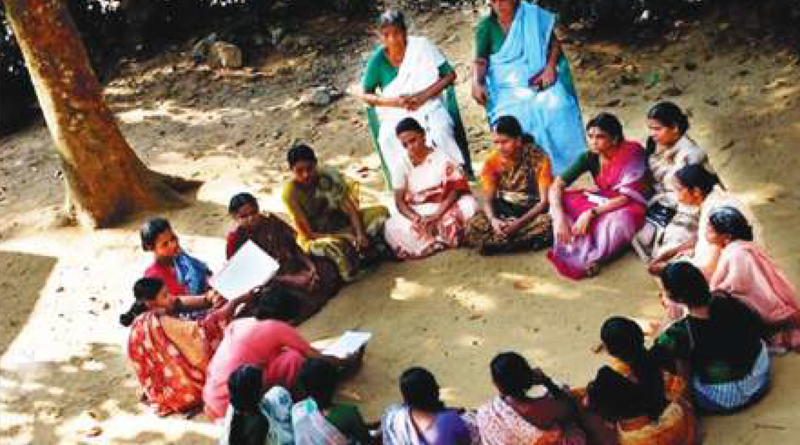
T he massive decentralized planning process was rolled out in five phases of distinct activities to enable participatory planning of local development interventions. In the first phase, grama sabhas were convened, and people at the local level mobilised to assess the needs of the locals. In the second phase, development seminars were held in every village panchayat, followed by the formation of task forces to prepare development projects. About 12,000 task forces were formed, and around 12 were worked out per village panchayat. Close to 120,000 people participated in these task forces. In the third phase, ‘development reports’ were prepared according to a format suggested by the State Planning Board, giving details such as the nature of activities envisaged and financial and organisational aspects. The lower tiers’ plans were prepared during the fourth phase. The fifth phase was meant to prepare annual plans for block and district panchayats by integrating the lower-level plans and, presumably, to develop their plans to complement the village panchayat plans. Afterwards, during the sixth phase, a Volunteer Technical Corps (VTC) consisting of volunteers with expertise in selected fields was formed to evaluate the feasibility of projects formulated by LSGIs and suggest modifications. Expert committees at the Block, Municipality and Corporation levels were formed by drawing from VTC members to help the DPC appraise plans and projects on the one hand and render technical assistance to local-level planning on the other hand. There had been modifications in subsequent phases of the programme from time to time to address emerging issues.
Resolving People’s Problems
T he paradigm of decentralized planning in Kerala has been regarded as a practical framework for addressing development problems involving people. It was also intended that decentralised planning with the people at the centre would accelerate local-level development by harnessing human, natural and financial resources to strengthen the productive base of the state. It was proposed that this be done by creating public assets and managing common property resources through better land and water management, forming the basis of primary sector development. Development administration was anticipated to become responsive, transparent and efficient as people plan and implement various interventions. The social security systems and service delivery were also expected to improve substantially as beneficiaries would be identified based on actual needs through transparent processes. The Twelfth Five-Year Plan approach envisaged concrete steps using information technology to strengthen the planning process. It is important to note that the Thirteenth Five Year Plan witnessed massive efforts by the state to take on unprecedented natural calamities hitting the state and the Covid-19 pandemic inflicting a severe blow to the economy. No sooner had the state embarked on recovering from the impact of two consecutive floods than the pandemic hit the state. This led the state to redefine its development priorities to recover the livelihoods of people devastated by natural calamities and reconstruct the state from the ruins. Against this backdrop, the Fourteenth Five-Year Plan was initiated in Kerala. The 14th Five-Year Plan envisages decentralization as the most effective tool for economic growth and aims to transform local governments into the hubs of local economic development. This increased significance is underscored by the government’s decision to provide local governments with as much as 30 per cent of the plan funds by enhancing the proportion by 0.5 per cent annually from 2021 to 22.
Effective Transfer of Power
Democratic decentralization has become the principal point in debates on development strategies in the developing world, as it signifies greater access to power and resources by the people. Among the different pathways to this objective, greater devolution of authority and resources to the lower strata of government is viewed as a prudent option. However, this is a tricky proposition as political and bureaucratic leadership at upper hierarchical levels will not easily part with the power and privileges vested with them. It is pretty unlikely that power will devolve independently unless and until law mandates it.
Getting the ideals of democratic decentralization translated into a pragmatic programme calls for a radical political process, fundamental policy changes and a great deal of re-engineering of governance systems. Ensuring people’s actual participation warrants such fundamental changes in polity and governance. Kerala took the decentralization task seriously, much unlike the rest of the country, and the process has continued since then with modification as time warrants. It has received acclamation within the country and globally for successfully transferring power to the third tier of governance, enabling public participation. More importantly, Kerala could institutionalise democratic decentralization and seamlessly integrate it into the state’s administrative structure. A host of institutions have been established to strengthen this unique model of democratic decentralization. It is surprising that no other state in the country has been able to attempt this transformative process to this level.
Democratic decentralization in Kerala has evolved into a powerful and self-sustaining system with a robust organisational structure, constant financial support, and the capability of the departments and personnel transferred to the local governments. However, the decentralization process should now focus on some essential responsibilities bestowed upon them because of the people’s growing needs and the state’s broader development goals. They include local economic development through supporting the productive sector, fostering entrepreneurship, generating employment, conserving natural resources, managing disasters, and addressing the impact of climate change. The growing urbanization and the need to address the issues of the aged population also pose serious challenges. All these new challenges and responsibilities call for increased capabilities of local governments to devise suitable strategies to address them and implement the resultant actions. The role of local governments will be more decisive as the state is heading towards a phase of faster economic growth with greater emphasis on equity and sustainability.