

Kollam- Then, Now, and Ahead

K.N. BALAGOPAL
Minister for Finance
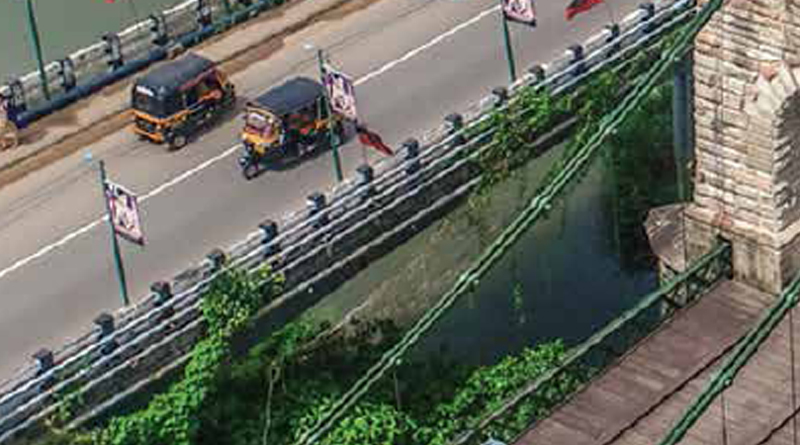
Modern Kollam, or Kollam district, has reached its seventh and a half decade of maturity. Its historical significance is underscored by the fact that it once served as the capital of Travancore, playing a pivotal role in Kerala’s history. The proverb Kollam Kandavanu Illam Venda, which translates to “the one who has seen Kollam no longer needs his home,” reflects the region’s deep-rooted heritage. Kollam has long been a centre of commerce and cultural assimilation, welcoming foreign influences while maintaining its distinct identity. The city’s past as a thriving port facilitated trade with Arabs, Persians, Greeks, Romans, and the Chinese. Over time, migrants speaking Tamil, Telugu, Kannada, Gujarati, Marathi, Urdu, Hindustani, and Tulu also found their way to Kollam, leaving an imprint on its cultural fabric. The remnants of this rich past stand as historical landmarks, each with a story to tell. The Suspension Bridge at Punalur, Thankassery Lighthouse, Chinnakkada Clock Tower, Kazhuthurutty Bridge, Aryankavu Pass, the Kollam-Sengottai Meter Gauge Line (now converted to Broad Gauge), Kollam Residency Bungalow, Cantonment Maidan, and the Old Quilon Bank (now an eye hospital) serve as living evidence of Kollam’s legacy. Thevalli Palace, Karbala, Paravur Palace, Valakam Palace, Railway Palace, Kannadi Bungalow in Kallar Estate, Kulakkada Nambi Math, and many others also hold historical significance.
A Political Stronghold
Kollam has been an important seat of power, witnessing significant shifts in governance. Its history of trade unions and labour movements fostered a strong democratic ethos. The district’s representatives have played an integral role in legislative history, with figures such as S Chettinathakarayalar, R Kesavan Pillai, C P Kochukunju Pillai, A N Kumaran, H E Muhammed Rawthar, R Raman Pillai, K Gopalakrishna Pillai, and Puthuppally S Krishna Pillai serving in the Travancore Legislative Council. Forty-six individuals from Kollam were part of the Sree Moolam Praja Sabha, and twelve represented the Sree Chithira Thirunal State Council. In Kerala’s first assembly elections, seven representatives were elected from Kollam. Today, the district has 11 MLAs. Former Chief Minister C Achutha Menon hailed from Kollam, and prominent political figures such as D Damodaran Potty, M N Govindan Nair, T K Divakaran, P Raveendran, P K Raghavan, P S Srinivasan, R Balakrishnapillai, E Chandrasekharan Nair, R S Unni, C V Padmarajan, P K K Bava, Kadavoor Sivadasan, V P Ramakrishnapillai, Babu Divakaran, K B Ganeshkumar, N K Premachandran, P K Gurudasan, M A Baby, Mullakkara Ratnakaran, C Divakaran, Shibu Baby John, J Mercykuttyamma, and K Raju have served in ministerial roles. Additionally, S Krishnakumar represented Kollam in the Union Cabinet.
The Road Ahead
Kollam’s future hinges on revitalising traditional industries and embracing change. The district’s expatriate community plays a key role in economic progress, and their contributions must be leveraged for development. The Budget 2025 earmarked significant investments in tourism and infrastructure for Kollam. A Rs 1,000 crore allocation has been set aside for the Vizhinjam–Kollam–Punalur corridor, positioning Kollam as the centre of this growth triangle. Plans are underway to establish an IT park on Kollam Corporation’s land in collaboration with KINFRA and KIIFB. This initiative, alongside the proposed IT and IT-enabled services park at Kottarakkara and the IT park at Kundara, is expected to transform the district into an IT hub. Additionally, Rs 5 crore has been allocated for a food park. Infrastructure projects such as the Kollam- Sengottai National Highway, the Kollam-Sengottai Railway Line, the New Greenfield National Highway, the Vizhinjam-Kollam National Highway, and the Punalur-Nedumangad-Vizhinjam Road will be developed to support future economic expansion.
The Growth Triangle
Global experience shows that world-class port cities stimulate the emergence of extensive industrial and production zones. The Vizhinjam- Kollam-Punalur Growth Triangle is poised to follow a similar trajectory, evolving into a major economic hub. The region’s infrastructure and workforce must be strategically redirected to accommodate new industries. The cashew industry, a traditional employment sector, requires modernisation and diversification. The establishment of component manufacturing and assembly units for electronic equipment could tap into the region’s skilled labour force. The government will act as a facilitator, ensuring the necessary infrastructure is in place. The Vizhinjam development hub project is expected to attract investments exceeding Rs 3 lakh crore and generate tens of thousands of jobs. Coordinated efforts between public and private sectors will be essential to ensure Kollam benefits from this transformation.
Decentralised Growth
Kottarakkara exemplifies Kerala’s evolving urban landscape, where medium and small towns are emerging as engines of economic growth. The government’s ‘Work near Home’ initiative, designed to decentralise IT development, is gaining traction. The first such centre in the state is already under construction in Kottarakkara, offering knowledgebased workplaces with modern amenities. Leading firms such as Zoho Corporation and GR8 Affinity have commenced operations in the region. Kottarakkara IHRD Engineering College has also become home to Kerala’s first campus industrial park, where students receive training and employment opportunities in robotics research. This model, if replicated across the district, could drive sustainable economic growth.
Unlocking Tourism Potential
Kollam’s tourism industry remains an underutilised asset. The government is working to attract international visitors, particularly in the medical tourism and hospitality sectors. Plans are in motion to develop a tourism circuit that enhances infrastructure, accommodation, and entertainment options through private sector investment. One of the key projects is the Marine Oceanarium, envisioned as a major attraction. Adventure tourism is also under consideration to enhance Kollam’s appeal. As the district aligns itself with global trends, it must capitalise on the sweeping changes taking place in Kerala and beyond. The government remains committed to ensuring development reaches every corner of the district. There is much to accomplish, but with collective effort, progress will be inevitable.