

Illuminating History with New Initiatives

Ramachandran Kadannappalli
Minister for Registration, Museums,
Archaeology & Archives
Comprehensive initiatives in museums, archaeology, and archives highlight Kerala’s rich cultural legacy and modern advancements
The Museums, Archaeology, and Archives Departments are responsible for efficient and comprehensive interventions to preserve the remnants, historical monuments, and documents of our nation’s grand heritage and legacy. In an era where historical facts are often distorted to protect narrow interests, it is an essential mission to safeguard these remnants as authentic witnesses to history.
Museum Department
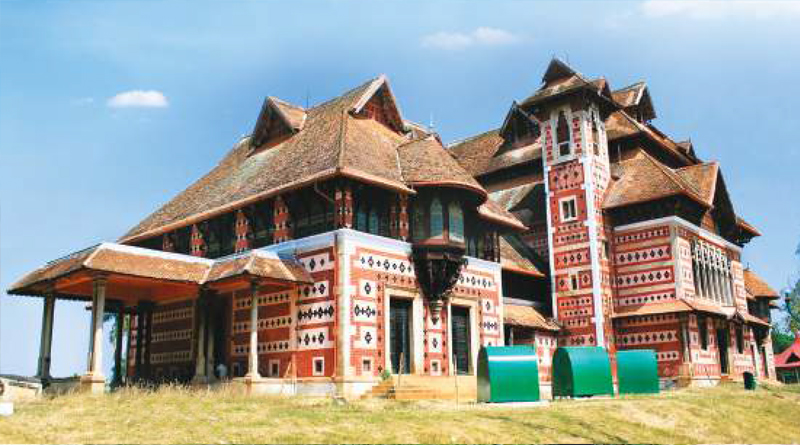
Following the modern concept of museums, thematic or storytelling museums have been established across the state over the past nine years. Notable additions include the Natural History Museum in T hiruvananthapuram, the Handloom Museum in Payyambalam, Kannur, narrating the story of handloom weaving, and the Kunkichira Heritage Museum in Wayanad, showcasing tribal culture. T he Raja Ravi Varma Art Gallery and its annex at the T hiruvananthapuram Zoo have been renovated to display invaluable paintings by Raja Ravi Varma. The AKG Smriti Museum, dedicated to the memory of A.K. Gopalan, is nearing completion in Peralassery,at Dharmadam legislative constituency, Kannur.Initial works for the Theyyam Museum in Chathappuram, Kalliasseri Constituency, Kannur, have commenced. Restoration work on the Kozhikode Art Gallery and Krishna Menon Museum building has been completed by the Archaeology Department. A DPR of 2.85 crore has been submitted for the second phase to set up exhibition facilities. Steps have been initiated to establish the Kerala State Museum in Thrissur, documenting Kerala’s unique developmental milestones, following the relocation of animals from the zoo to Puthur Zoo.The multi purpose museum in Thrissur has been renovated. A guided tour with modern technological enhancements has been initiated at the Natural History Museum in Thiruvananthapuram to enhance visitors’ knowledge and enjoyment. Development work on the Botanical Garden at Thiruvananthapuram Museum has been completed. Barrier-free facilities for differently-abled visitors, including accessible restrooms, drinking water, and parking, have been introduced at the Napier Museum, Thiruvananthapuram. To review and provide guidelines for state museums, the Museum Commission was appointed, fulfilling a promise from the Second Pinarayi Government’s election manifesto.
Archaeology Department
Seven new museums have been established.
To review and provide guidelines for state museums, the Museum Commission was appointed, fulfilling a The Gandhi Smriti Museum at the old police station in Payyannur, where the freedom struggle had a significant presence, showcases Gandhi’s struggle history, his visits to Kerala, freedom movements in northern Kerala, and agricultural struggles. The Thrissur District Heritage Museum displays copies of historical paintings from the old Kochi Kingdom. promise from the Second Pinarayi Government’s election manifesto.
The Idukki District Heritage Museum in Painavu reveals Idukki’s history from the Megalithic era to modern times. The Palakkad District Heritage Museum highlights Kerala’s musical heritage, featuring various musical instruments and traditions.
The Ernakulam District Heritage Museum in the historic Fort Kochi Bastion Bungalow illustrates Kochi’s history and foreign connections.The Malappuram District Heritage Museum, housed in the historic Hajur Kacheri Mandiram in Tirurangadi, explores Malappuram’s culture, history, nature, and political changes. Comprehensive renovations have been carried out for the Koyikkal Palace Museum, Hill Palace Museum, Calicut Pazhashi Raja Museum, Padmanabhapuram Palace Museum, and Thrissur Archaeology Museum. Scientific conservation of over a hundred monuments has been conducted during this period. Detailed scientific surveys were carried out at Ezhimala Fort in Kannur District and Parambathkavu in Valanchery. Extensive field surveys were conducted at Madayippara in Kannur, an archaeologically significant site.A comprehensive archaeological survey in Attappadi, Palakkad District, was completed. Archaeological explorations near Ariyittapara, Cheemeni in Kasaragod District, uncovered rock carvings and megalithic monuments.The ruins of the British transit jail in Mudikkode, Malappuram District, related to the 1921 Malabar Rebellion, were documented through exploration.Scientific excavations at Farokh Fort were conducted in two phases. Excavations at Farokh Fort, a historical site from the latter half of the 18th century, revealed ceramic fragments, bullets, and parts of weapons, confirming its historical significance related to Tipu Sultan’s battles in Kerala.
Archives Department
The International Archives and Heritage Centre, a joint venture between the State Archives Department and Kerala University, is nearing completion at the university’s campus, designed to be an international-level research centre for archival studies. The renovated Kannur Science Park has been inaugurated. Ongoing projects for the scientific preservation of documents include the creation of subject indices for archives. As part of the Central Archives’ reference media project, 1,018 scrolls and 1,400 paper documents have been catalogued. The Community Archives Project aims to raise public awareness about archival materials, identify documents through surveys, preserve them locally, and acquire them from individuals willing to donate. The department has acquired 96 diaries of M. Rajarajavarma, dating back to 1922, from the renowned writer N.S. Madhavan. Scientific preservation of rare library books is ongoing. The Public Records Bill, aimed at ensuring careful handling, preservation, and legal sanctity of public records, is under review by the Select Committee in the Legislative Assembly.
Registration Department
As one of the earliest established departments in India, Kerala’s Registration Department is now on the path of modernization. Online facilities for document registration have been implemented through the digital system known as “PEARL” (Package for Effective Administration of Registration Laws).Over the past four years, the construction of 28 Registrar offices has been completed with funds from KIIFB, Public Works Fund, and MLA Fund. Compact facilities are planned for all Registrar offices.in Thiruvananthapuram, Idukki, Ernakulam, and Kasaragod districts, from 1988 in Kollam, Pathanamthitta, Alappuzha, Kottayam, Kannur, and from 1998 in Thrissur, Palakkad, Malappuram, Kozhikode, and Wayanad districts have been digitized.T he goal is to create a cashless office by transitioning all services to an online platform, with complete modernization planned within the next year
Key initiatives include: 1. Digitalization of documents 2. 3. 4. 5. 6. 7. Restoration of damaged registration volumes Simplification of registration procedures Full implementation of ‘e-stamping’ Appointment scheduling for document registration ‘Anywhere Registration’ within districts Online issuance of encumbrance certificates 8. 9. Online certified copies Online submission of marriage registration applications 10. Complete online filing system for mortgages 11. E-stamping facility for purchasing stamp papers 12. E-payment and e-POS facilities for all services 13. Online NRI chit registration 14. Online registration for partnership firms and societies
The AKG Smriti Museum, dedicated to the memory of A.K. Gopalan, is nearing completion in Peralassery,at Dharmadam legislative constituency, Kannur.