

Lighting The Way to a Future Without Darkness

K. Krishnankutty
Minister for Electricity
Kerala’s energy transformation is lighting the way to a future without darkness
A Kerala without power cuts and load shedding is now a reality. For the last nine years, Kerala has not heard of power cuts and load shedding. In addition to domestic power generation, long-term agreements to procure power from independent producers and central power stations helped in ensuring a reliable and continuous supply of electricity in the state. Kerala’s maximum electricity demand at present stands at around 6,000 megawatts, with domestic generation meeting only about 30 per cent of the state’s annual power requirements. The state’s domestic production capacity is 4,347.8 megawatts, of which 1,516 megawatts is derived from solar power plants. However, a limitation is its unavailability during peak demand times, posing challenges to ensuring a steady power supply during high-demand periods
All Set for Future Demands
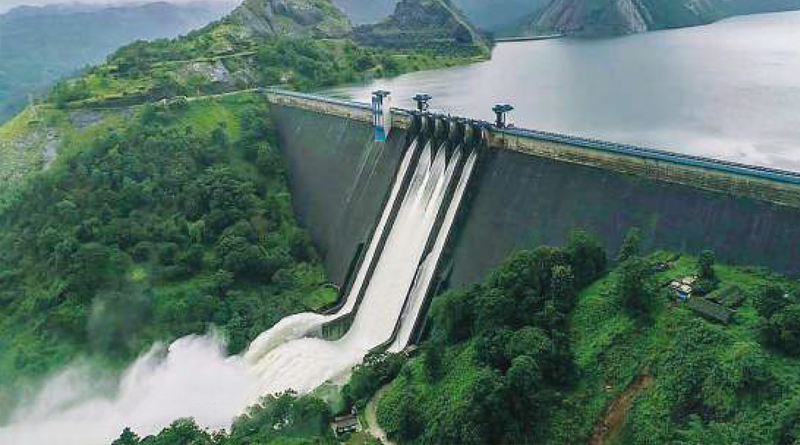
According to the 20th Electric Power Survey of India report released by the Central Electricity Authority, the maximum electricity demand in Kerala is projected to reach 6,707 megawatts by 2030–31. Considering the extraordinary growth in the state’s electricity demand over the past two years, the Kerala State Electricity Board (KSEB) is fully prepared to meet a demand of up to 10,000 megawatts by 2030. The KSEB is for ensuring a seamless and uninterrupted power supply across the state through boosting domestic power generation, improving storage systems, expanding the state’s electricity import capacity, and fortifying the transmission and distribution network. In the coming years, Kerala is set to generate approximately 1,500 MW from hydropower projects. Major initiatives include the second phase of Idukki project (800 MW), Lakshmi project (240 MW), and the Sabarigiri Extension project (450 MW).
At present, construction of ten hydropower projects with a combined capacity of 187.536 KERALA CALLING 2025 MAY 23 KERALA CALLING 2025 MAY 23 MW is going on. Apart from this, small-scale projects totalling 92 MW are expected to be completed by 2030, which would further contribute to the state’s energy goals.
Since this government came into office, Kerala’s domestic electricity production has increased by 1,360.75 MW. The state got an increase of 148.5 MW from hydropower projects, 1,211 MW from solar power plants, and 1.25 MW from wind energy
Projects Completed This Year •
The Pallivasal Expansion Project, with a 60 MW capacity and an annual electricity generation of 153.9 million units, has been completed. Trial power generation has begun. A key feature of this project is its ability to generate electricity even during summer months. • The Chinnar Project, which has a 24 MW capacity and is expected to generate 76.45 million units annually, is set to be completed within this government’s tenure. • After a delay of more than one and a half decades, the 40 MW Thottiyar Hydroelectric Project has been completed. • The 40 MW Mankulam Hydroelectric Project, 24 KERALA CALLING 2025 MAY KERALA CALLING 2025 MAY which was launched under this government’s initiative, is expected to be completed within its tenure.
Solar Power
Kerala has become a model for the country in rooftop solar systems, with an average addition of 30 megawatts each month. By the end of this year, the state will generate 500 megawatts from rooftop solar installations, floating solar plants, and solar parks. Looking ahead, the total installed solar capacity is projected to reach between 3,000 and 3,500 megawatts by 2030. Right from the launching of the ‘Soura Project’ under the ‘Oorja Kerala Mission’, concerted efforts are being taken in tapping rooftop solar energy, especially rooftop solar plants, by popularising the available subsidy schemes and entrusting jobs to more empanelled developers. Kerala could join the energy elite club of renewable energy-rich states of the country, crossing the benchmark of 1,000 MW capacity of solar energy production. As per the latest updates, Kerala comes in the second position in the country in claiming subsidy towards rooftop solar installation. Consequent to the launching of the PM Surya 24 Ghar scheme by the Ministry of New and Renewable Energy, aiming solarisation of middle-class domestic households, the rooftop solar installation contributes addition of around 35 MW solar power to our grid every month. T he total registration under the PM Surya Ghar scheme, to the tune of 2.5 lakhs within the state, shows the widespread acceptance of the scheme. Kerala, being a state blessed with plenty of dams, rivers, and backwaters, has an estimated potential of 6,000 MW from floating solar plants. Unutilised and uncultivable water bodies can be utilised to install floating solar plants, which will definitely contribute to our green energy requirements. A unique project in this regard is the ongoing 50 MW West Kallada floating solar project in Kollam district. The said plant is to come up in the 300 acres of uncultivable waterlogged paddy fields in West Kallada village of Kunnathur taluk. The project envisages a 3% benefit share to farmers who own the land. The state government has supported the project, allowing Viability Gap Fund to the tune of Rs. 11.83 crore for promoting such schemes. The uniqueness of the project is the assured returns to the farmers, and this project can be replicated all over Kerala. Another remarkable project implemented in the state by ANERT is the solarisation of ST and SC households by installing solar panels of capacities 2 KW and 3 KW using state and central funds. T his scheme ensures an income to such families by way of cost of energy supplied to the grid. So far, 715 houses under the Life Mission project and 305 houses built by the state SC department were solarised under this scheme. The electrification of remote tribal hamlets, where extension of the electric grid is not possible, hybrid projects with solar, wind, and battery systems are being implemented. This hybrid project has been completed in three hamlets, benefiting 60 tribal families.
Battery Storage
Given the significant reduction in costs and the ease of installation, battery storage systems are set to play a crucial role in Kerala’s future energy strategy. Plans are in vogue to implement battery storage projects with capacities ranging from 2,000 MWh to 5,000 MWh in the coming years. In the first phase, projects with capacities of 250 MWh and 1,000 MWh will be implemented immediately, ensuring a robust foundation for energy storage and enhancing grid stability