

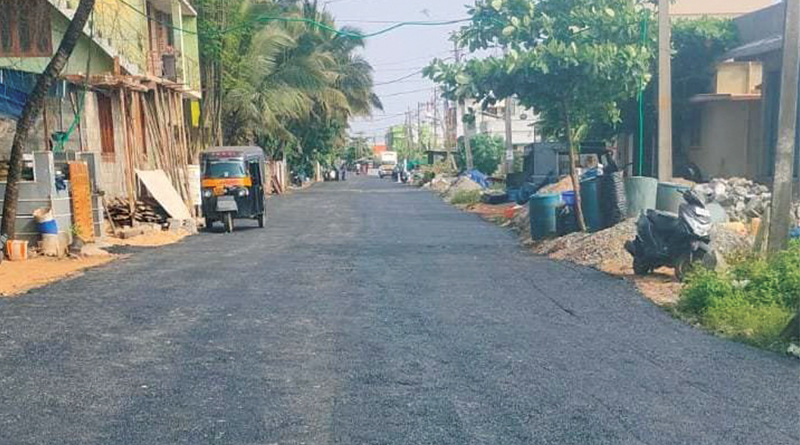
Roads for Sustainability

Mohamed Ansari
Improving Kerala’s coastal roads boosts livelihoods, eases fish transport, and safeguards vulnerable communities through unified, quality infrastructure upgrades.
Nowhere is the need for road infrastructure more acute than in Kerala’s coastal belt. With a large fishing community dependent on the quick transport of perishable catch, the importance of well-constructed coastal roads cannot be overstated. Roads in these regions do more than connect—they empower. They link fishing harbours to local markets and processing units, reducing waste and improving incomes. Being one of the densest road networks in India, with 528.8 km of roads per 100 sq.km, which is well above the national average of 387 km, the challenge lies in quality and accessibility. About 90% of the state’s village roads are single-lane, bearing 20% of the overall traffic.
This traffic is growing rapidly, at an annual rate of 10–11%, underscoring the need for continuous To address this need in the coastal area, the Government, through the Harbour Engineering Department, has launched a comprehensive coastal road development initiative. This program focuses not only on improving existing roadways but also on adapting them to meet the challenges of coastal terrain—frequent flooding, heavy monsoons, narrow road widths, and increasing coastal erosion due to climate change. The state’s Fisheries Department has allocated an impressive 90 crore annually for the development of coastal roads. This unified effort, with a single agency overseeing implementation, ensures adherence to consistent design and quality standards across the state—an important step toward long-term resilience and connectivity.
Between 2021 – 2026 financial year administrative sanction has been granted for the upgradation of 638 coastal roads across 77 constituencies, with a total investment of 359.31 crore. Of these, 409 projects are already completed, and 163 are underway. This infrastructural boost is proving especially beneficial for poor and marginalized fishing communities, providing smoother, safer access to livelihoods and essential services. In turn, the improved roads foster regional development and enhance economic opportunities along Kerala’s coast. In a developing country like India, rural and village road networks are the lifelines of progress, especially in states with unique geographic and social compositions. Kerala, renowned for its high population density and expansive coastline is undergoing a silent but significant transformation through targeted investment in its coastal roads. By prioritizing these coastal networks, Kerala is not just building roads but connecting communities, supporting local economies and enhancing sustainable development through improved livelihoods, and coastal resilience for generations to come.
| District-level efforts reflect this wide-scale commitment : |
| • Thiruvananthapuram: 76 roads, 32.58 crore • Alappuzha: 125 roads, 72.89 crore • Kozhikode: 75 roads, 37.45 crore • Kannur: 91 roads, 50.84 crore • Kollam: 45 roads ,34.45 crore • Ernakulam:30 roads ,17.26 crores • Malappuram : 82 roads ,47.14 crores • Kasaragod : 45 roads , 25.52 crores • Kottayam: 13 roads ,10.15 crores • Thrissur : 50 roads ,27.71 crores • Palakkad : 8 roads ,4.9 crores |
– The writer is Chief Engineer at Harbour Engineering Department, Government of Kerala