

Citizen’s Responsibility in Disaster Management
- Pinarayi Vijayan
Chief Minister
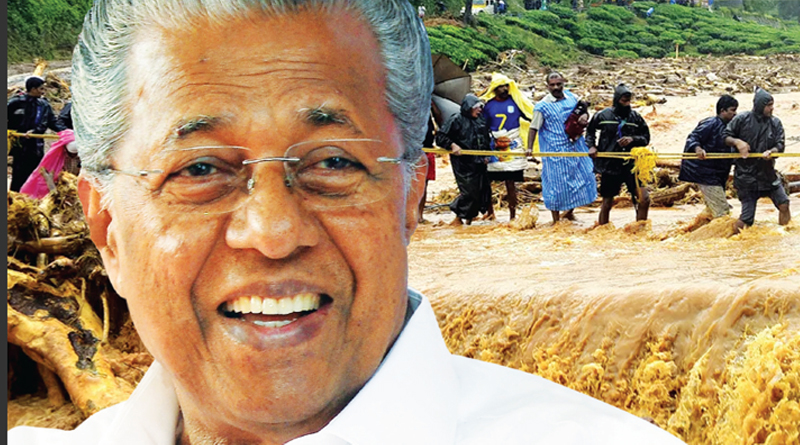
Once again we are at the peak of the monsoon season. The government has completed all preparatory works for disaster management (DM) before the onset of monsoon. The lessons learnt from past disasters and subsequent evacuation processes have shaped our disaster management strategies. Devastating floods we experienced in 2018 and 2019; relief camps we operated and health safeguards we observed across 14 districts have enhanced our ability to manage disasters. The unfortunate Meppadi Landslide in 2024 in Wayanad district where we lost 298 precious lives made us reinforcing stricter slope regulations and hyperlocal early warnings. We have moved far beyond reactive relief to prevention, preparedness and resilience, guided by national mandates and global best practices.
We have implemented Susceptibility-Linked Relocation Scheme since 2018 to mitigate disaster risks, targeting families living in high-hazard zones vulnerable to floods, landslides and coastal erosion. Under this scheme each eligible family residing in a hazard-prone area receives ₹10 lakhs to relocate to safer locations. Our other initiatives include Disability-Inclusive Disaster Risk Reduction, advanced multi-channel Early Warning Systems, and Location-specific SMS alerts. We have collaborated with the India Meteorological Department and connected with more than 100 Automatic Weather Stations (AWS). We have installed South India’s first X-band radar in Wayanad. Moreover, we have established 17 specialised shelters and more than 20,000 mapped buildings capable of housing more than 800,000 people.
We have amended Municipal Rules & Kerala Model Building Rules to ban construction obstructing drains and integrate risk into LSG master plans. We have invested ₹2,500-crore Post-2018 in climate-smart housing, livelihoods and infrastructure as part of Rebuild Kerala Initiative. The state has also invested in Tech-Driven Solutions in river flood management, satellite-enabled monitoring etc and ensured maximum community participation in all of our DM initiatives. We have international alliances with Netherlands (coastal resilience), World Bank (Resilient Kerala), Norwegian Geotechnical Institute (slope stabilisation), Asian Disaster Preparedness Centre (risk assessment). At the frontline, the State Emergency Operations Centre (SEOC) coordinates realtime alerts and responses. Disaster management teams are trained and empowered at district, local self-government (LSG), and ward levels, with all 1,034 local governments now equipped with approved DM plans. However, disaster resilience is the duty of every citizen. We must enhance disaster literacy in schools and villages and support LSGs with data, tools and funding. We should be zero tolerant to risk-compliant constructions and encroachments and support schools, hospitals and persons with disabilities to strengthen inclusive response systems. We should help the LSGD and DDMA to expand early-warning networks—sirens, radio, mobile and satellite alerts, and foster community trust by volunteering in Samoohika Sannadha Sena, Civil Defence and Aapda Mitra. Let’s stay together and face all hard times.