

Building the Voice of the Future

INTERVIEW WITH K.V. MANOJ KUMAR
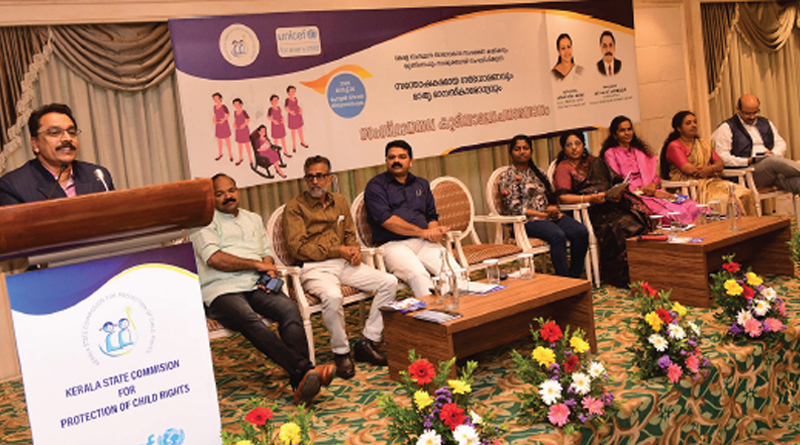
Every child deserves to be heard. When their right is at stake, silence is not an option and the Kerala State Commission for Protection of Child Rights ensures it is heard. The Kerala State Commission for Protection of Child Rights was established on June 3, 2013, under the Commissions for Protection of Child Rights Act, 2005, and the Kerala State Commission for Protection of Child Rights Rules, 2012.Today, the commission is headed by Chairperson K V Manoj Kumar, former lawyer at Thalassery, Co-operative Ombudsman and Rubco legal adviser.
?Established in 2013, the Kerala State Commission for Protection of Child Rights works to uphold child rights and addresses injustices against children. Could you briefly explain what the Commission is, the key interventions it has carried out generally for children so far?
We have undertaken several significant initiatives to protect child rights in Kerala. Training sessions have been conducted for various stakeholders. Training has been completed in 152 block panchayats. As part of the initiative to create one lakh child ambassadors across the state, training has been provided to the teachers in charge of the Student Police Cadet (SPC) programs in every district. District-level meetings with stakeholders related to three major laws, the Juvenile Justice (Care and Protection of Children) Act, the POCSO Act and the Right to Education Act, have been also be held, after which a comprehensive report will be submitted to the government. The Commission has taken steps toward making Kerala a child labour-free and child marriage-free state. The state was divided into two zones, and zonal meetings were organised in Thiruvananthapuram and Kozhikode with specially appointed Child Development Project Officers (CDPOs).
? The rising number of drug-related cases has become a serious concern. Reports of drug peddlers targeting students over the past few years have alarmed the public. Can you elaborate on the Commission’s anti-drug initiatives?
We believe that projects that aim to address the root causes of these issues must be developed. One of the significant findings is that children from broken families, children of parents addicted to substances and those whose parents are either incapable or inefficient in properly caring for them, often end up in such vulnerable situations. Our aim is to identify such children and prepare an individual care plan for each of them. We were able to realise this through a study conducted six months ago. Our team visited all 35 family courts across Kerala, to understand the psychological distress experienced by children of parents involved in court cases.
?A surge in violent incidents involving students and teenagers ranging from street fights to brutal assaults has left the state in shock. How does the Commission plan to ensure a safe and inclusive environment for children?
Now, children have instant access to everything. So they tend to become impatient. That’s exactly why the solution must begin within the family itself. To address this, the Commission has launched a major initiative in collaboration with ‘Kudumbashree’ under the concepts of ‘Good Parenting and Democratic Parenting’. Nearly 3,000 faculty members have been trained across all districts. This initiative promotes involving children in the family’s decision-making processes and teaching them values at home. The Commission firmly believes that such initiatives will lead to meaningful and lasting change.
?The involvement of society and communities plays a vital role in safeguarding child rights and supporting children’s mental health. What are the contributions to include communities in child rights protection?
Yes, we are indeed moving forward with a major initiative. To communicate the functions and importance of the Commission effectively to society, we are launching an Internet Radio. Through this platform, we aim to reach students, teachers, parents and the society at large. The network of Anganwadis and Kudumbashree will be utilised for this.
?Embedding child rights in education helps students recognise and assert their own rights and those of others. Understanding one’s rights is essential for both adults and children. What steps are being taken to strengthen child rights education within the school curriculum?
We have already submitted our recommendations to include Child Rights as a part of the school curriculum. Though teachers need to have a thorough understanding of child rights, this subject is currently not included in the course curriculum of B.Ed. To address this, we convened a consultation with registrars and deans from all universities. This is the first time in Kerala that a Commission has taken the initiative to organise such a meeting. A consensus has been reached to revise the curriculum accordingly.
?Parents and teachers, having the closest access to children, play a crucial role in monitoring their mental health and overall well-being. How can parents and teachers work with the Commission to identify and support children at risk of social or academic exclusion?
A well-structured module has been developed that focuses on how children should be approached and handled effectively, and we are now preparing to move into the second module development. A key component is the training of school counsellors. We selected at least 10 counsellors from each district and provided them with specialised training. These counsellors then conducted studies in individual schools, collecting data related to the mental health and behavioural patterns of children. A special high-level committee was formed to examine the findings. The committee has already held two sittings, during which they reviewed the data and findings in detail. Based on this, a comprehensive report is now being finalised. Kudumbashree is one of the most active and far-reaching systems of the government, capable of reaching the grassroots level effectively. We regularly convene meetings with Kudumbashree’s district-level officers. Training will be extended to parents through Kudumbashree’s networks at the panchayat, ward and micro-unit levels. Through this approach, we believe the general public will gain a strong and clear understanding of how to protect and care for children effectively.
?Two of the most important legal frameworks related to child protection in India are the Juvenile Justice and the POCSO Act, so what are these laws and how does this actually empower our youth?
For the Commission, the Juvenile Justice (Care and Protection of Children) Act holds greater significance than the POCSO (Protection of Children from Sexual Offences) Act. While the POCSO Act primarily defines the punishment and legal procedures for committing an offense against a child, and also emphasises child protection, it is the Juvenile Justice Act that lays out the comprehensive framework for how a child should actually be protected. The Juvenile Justice (Care and Protection of Children) Act outlines, in detail, how to provide care and protection to a child. Section 3 of the Act lists around 16 core principles related to child protection. These principles include, for example, the past of a child who has been punished, must be forgotten immediately after they complete the sentence, because every child is presumed to be innocent. These principles form the heart of ‘Child Rights’. Sections 75 onward describe what action must be taken when a child is subjected to cruelty or harm. It also details how a child classified as a Child in Conflict with Law (CCL) should be rehabilitated. Importantly, this law clearly states that both categories, a child who is a victim and a child who is accused, must be protected equally and responsibly. That is why the Juvenile Justice Act is of such vital importance
?With the state’s education system shifting towards a more digital and future-oriented approach. Looking ahead, what is your vision for building a more child-rights-friendly academic and social environment in Kerala?
It is true that a digital divide exists between teachers and students. Teachers are unable to present lessons in ways that meet the expectations and interests of digitally-native students leading to weak connection between teacher and student. Teachers must, therefore, design lesson delivery methods that align with how children accept and engage with information today, primarily through visual and auditory formats. Every classroom should ideally be digitised. Students now prefer to learn by watching and listening, rather than referring textbooks. All necessary protective mechanisms must be in place to improve infrastructure of POCSO court. A major concern is that children must not come into direct contact with the accused in any situation. Ernakulam currently has a well-functioning childfriendly POCSO court. In Thalassery POCSO court, the Commission itself took the initiative to make the space child-friendly, using children’s artwork and visuals to create a welcoming environment. Our vision is that all POCSO courts across the state adopt such child-friendly practices. The fundamental aspiration of the Kerala State Commission for Protection of Child Rights is for children to grow up in a joyful and nurturing environment. As Oscar Wilde once said, ‘The best way to make children good is to make them happy’. Our schools should be places where happiness is central, where children should be more excited to return on a Monday morning than to go home on a Friday evening. This is the kind of positive environment we must create in our schools. Each child must have the opportunity to learn and grow in line with their individual aptitudes.